Showing posts with label The Cinnabar. Show all posts

1 Jul 2026

1 Jul 26 - Childhood Memories Arriving Earlier These Days

One of my early memories from mid-August holidays during the long school break, was seeing The Cinnabar caterpillars gorging on Ragwort. I was a bit surprised to find lots of fully grown caterpillars doing this on my visit to Brownsea at the start of July. The hot, dry Spring of 2026 has been setting lots of records for flying Moths, Butterflies, Dragonflies etc, so I guess this early date shouldn't be too surprising.
The Cinnabar Caterpillars: Their bright colours are a warning sign that they are not nice to eat
For some reason, my Birding database is using this older name of The Cinnabar, rather than Cinnabar or Cinnabar Moth. As I've not got time to change all the records, photos etc I'm just going to stick with this older name.
The Cinnabar: Adult. Goring-on-Thames (13 Jun 14)

13 Jun 2014

13 June 14 - Down By The Riverbank

After successfully seeing the Brilliant Emerald Dragonflies, the plan was to get on the road again before the M25 got too busy. Even leaving mid afternoon, it still didn't stop me hitting slow traffic on the motorway, but eventually I was heading West on the M4 to Goring-on-Thames. This is a site for Club-tailed Dragonfly. Despite searching for the best part of 2 hours along the river bank, I failed to find any. But there were good numbers of Banded Demoiselles & a few Red-eyed Damselflies.
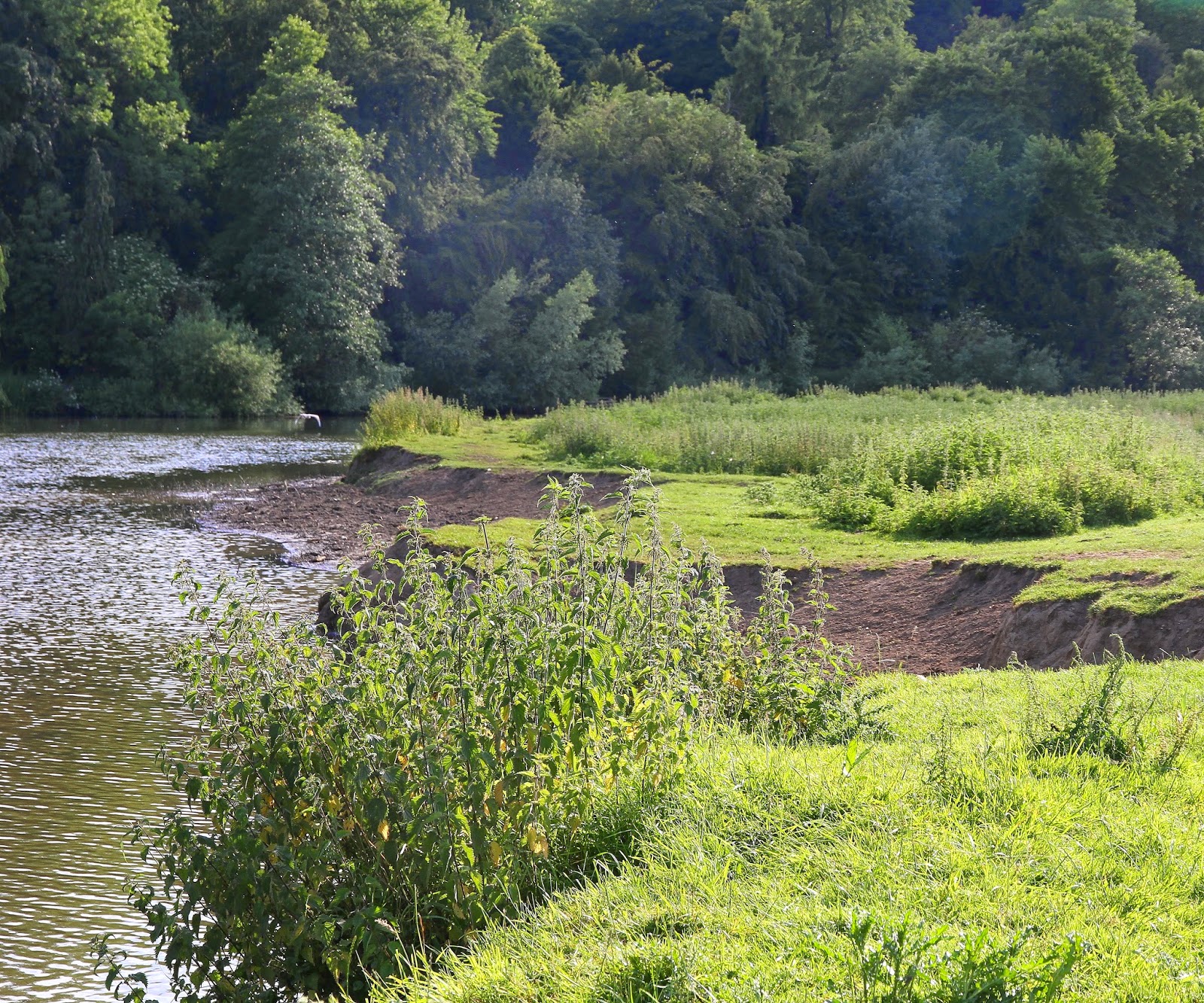
Goring-on-Thames: The riverbank
Goring-on-Thames: Around the viaduct is a good area for the Club-tailed Dragonflies
Banded Demoiselle: Male. I must have seen about 200 Banded Demoiselles along the riverbank
Banded Demoiselle: Female
Red-eyed Damselfly: Male. There were a half dozen along the river bank. Males have turquoise blue on the final 2 segments (segments 9 & 10) of the abdomen, while the similar Small Red-eyed Damselflies have the turquoise blue also extending onto the sides of segment 8 as well
Tree Bumblebee: This looks to be one of the commoner & easier Bumblebees to identify
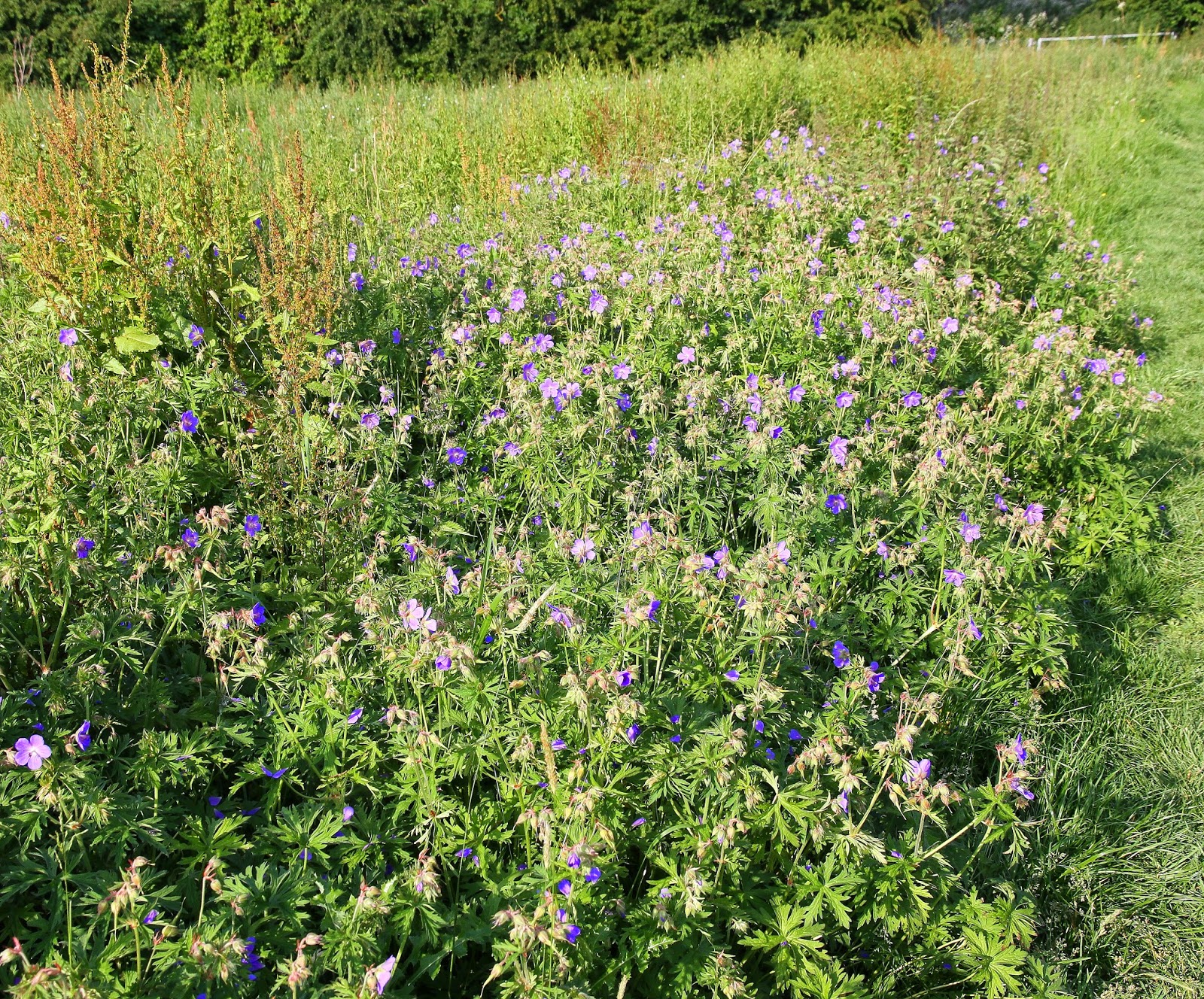
The Tree Bumblebees were all on this stand of blue flowers
The Cinnabar: A common day flying Moth at this time of the year 
Ladybird sp: I suspect this is yet another variant of Harlequin Ladybird, but it might be a 10 Spot Ladybird variant. Please add a Comment if you can shed light on it's identification
Mayfly sp: Saw several of these
Stock Dove: Just managed to sneak a bird photo in on the walk back to the car
Returning home, I decided to take the scenic route along the A303 through Wiltshire & go cross country to Dorset. Usually I cut through Salisbury, but for a change decided to carry along the A303 a bit further & explore. Really glad that I did as there were a number of highlights with this route.
Stonehenge: It's still here. Looking from the A303 along the Southern boundary
The next place was the Fovant Badges. I've not heard of this before I saw there. But in 1916 these images were carved into the hillside to remember the contribution that these regiments, who wever stationed locally in transit camps, were making to the First World War effort. Well worth a visit if you're nearby.
Fovant Badges: The Royal Wiltshire Yeomanry, 6th City of London Regiment & Australian Commonwealth Military Forces (left to right). More information on the Fovant Badges & those lost to time can be found on The Fovant Badges Website
Fovant Badges: Royal Corps of Signals, The Wiltshire Regiment, The London Rifle Brigade, The Post Office Rifles & The Devonshire Regiment (left to right)
Soon after I was on small back roads heading South, when a Muntjac Deer was surprised by the roadside. Unfortunately, it disappeared through the hedge before I could get a photo. This is an introduced Deer species that is fairly common in the Home Counties & East Anglia, but uncommon at best closer to Dorset. It's the first one I've seen in the UK as I rarely visit Norfolk these days, although I heard their distinctive barking calls after dark several times, whilst working in the Home Counties last year.
Muntjac Deer: The small size of this Deer is distinctive (Periyar, Western Ghats, Jan 14)
Finally, I was passing through great downland country where some of the farmers have been convinced to set aside areas for wildlife.
Grey Partridge: Quite pleased with this shot considering how poor the light was
Brown Hare