Showing posts with label Strap-toothed Beaked Whale. Show all posts

26 Jun 2022

26 Jun 22 - Half A Million & Going Strong

I started this Blog back on 24 Oct 13 after I bought myself a Canon 7D & 400 mm lens. A few years ago, I upgraded the camera gear to a Canon 7D Mark II & 100-400 mm Mark II lens. I'm a Birder, who takes photos for my enjoyment, but I don't have the skills, patience or interest in becoming a photographer.

The original aim of the Blog was to use it as a diary for myself where I could put my photos to avoid them being tucked away on my laptop & lost for ever. It's also allows me to quicky dip into some of the days out Birding or longer trips over the last eight & a half years and quickly relive the memories. While this was for my own memories, I quickly expanded the aims of the Blog to "showcase both the excellent birds & other wildlife in the UK as well as abroad".

When I started the Blog, I hoped that other people would also enjoying reading it and would be inspired to visit some of the places documented and enjoy the Birds and other wildlife I've mentioned. I had no idea whether the Blog will be popular or not, but I must be doing something right as I passed the half-million hits on the Blog yesterday. The Blog has been viewed from 165 countries or major regional territories.
The 165 Blog Flags
Over the last few years, the frequency of new Blog Posts have varied based upon my available time to process photos & also whether I've got interesting photos to post. Foreign trips have clearly been a big source of interesting photos and I've thoroughly enjoyed sorting the photos from a foreign trip & writing the Blog Posts. I get the most enjoyment out of foreign trips, by the research & planning that leads into the trip, the trip itself and finally, the post trip analysis of the species seen, including investigating some of the complex identification of some of the species seen.

Travel features highly as a theme and since starting the Blog, I've been lucky to visit many parts of the UK & abroad including: Holland (Nov 13); India including the Andaman Islands (Dec 13 - Jan 14); Morocco & Western Sahara (Feb 14): Israel (Apr 14): Croatia (May 14): French Polynesia and Pitcairn (Nov 14); California (Nov 14); Turkey (Jun 15); Finland (May - Jun 16); Colombia (Feb - Mar 18); Chile (Mar 18); the Atlantic Odyssey from Argentina to Holland visiting South Georgia, Tristan da Cunha, St Helena, Ascension Island & Cape Verde (Mar - May 18); a ferry from the UK to Santander & back (Aug 18). C19 severely impacted the travel plans since it's outbreak, but I've managed trips to Ireland in Aug 16, Mar 22 & Jun 22.

This is the 725th Blog Posts which cover a mixture of mainly Birding related subjects, but also Cetaceans, other Mammals, Butterflies, Dragonflies & other insect groups, Sea Turtles, Reptiles and Amphibians, Orchids and a few other groups. There are also the occasional historical Posts. Over 1150 species of Bird have been included on the Blog, along with another 400 other species of wildlife.

There are too many favourites to detail all the Blog Posts. Expanding the date index allows readers to scroll back to a particular period. More usefully, the Labels section on the right hand side allows readers to click on a species of interest & quickly find all the Blog Posts where that species occurs. To whet your appetite, here are ten of my favourite Blog Posts from the last few years.

I will start with a 2020 Blog Post covering finding the first Buff-breasted Sandpiper for St Aldhelms: my favourite UK Wader.
Buff-breasted Sandpiper: The first for St Aldhelms & one that was on the Self-found Wish List for many years (20 Sep 20)
One of my favourite travel Blog Posts including this gorgeous Tuamotu Sandpiper photographed on an expedition cruise to French Polynesia & the Pitcairn Islands group.
Tuamotu Sandpiper: This mst be the only Wader with a sweet tooth. Tenararo, French Polynesia (12 Nov 14)
I've enjoyed documenting memorable twitches & one of them was the Chestnut Bunting twitch to Papa Westray.
Chestnut Bunting: This Blog covered the private charter flight onto Papa Westray and has had one of the highest hits for a single Blog Post (28 Oct 15)
Another memorable twitch was a mini break to Holland with Dave Gibbs for a Hawk Owl that had taken up residence in the middle of the small town of Zwolle.
Hawk Owl: This ticked a number of boxes including a successful twitch, foreign travel and an Owl: one of favourite Bird families. Zwolle, Holland (27 Nov 13)
One of the things I've enjoyed doing is pulling together an Index of all of the Blog Posts under a certain wildlife group. The Indexes can be found below the Blog's banner. Currently, I've created Indexes for Whales, Beaked Whales, Blackfish, Dolphins & Porpoises and Sea Turtles. Clicking on these Indexes, allows the reader to quickly find all the Blog Posts on a particular wildlife group. I will add some new Indexes in the future. I particular enjoyed the Blog Posts that allowed me to create the Sea Turtle Index.
Leatherback Turtle: At sea between St Helena and Ascension Island, Atlantic Odyssey (22 Apr 18)
One of the Blog Posts looked at the St Aldhelms Continental Swallowtail Butterflies in early July 14. After seeing them, I tried identifying individuals from the photos to work out how many might be involved. Examination of my photographs, along with those from other people, documented five different individuals. The assumption is a female arrived earlier in the Spring, laid some eggs which produced this short-lived group. That year, Continental Swallowtails were seen at a number of other locations in the South East of the UK.
Swallowtail: This was individual B. It's identification from the other four individuals are detailed in this Blog Post (2 Jul 14). A follow-up Blog Post on 11 Jul 14 confirmed there had been no wedding released Butterflies in the previous 3.5 years that the currently vicar had been conducting services at the chapel
One of my passions is to dig deep into the identification of some of the tricky to identify species that I have seen. Initially, this is to confirm what I've seen. In Spring 18, I enjoyed 7 weeks on the expedition ship Plancius travelling from Ushuaia, Argentina back to Holland, stopping at a number of Atlantic islands en route. The first was St Georgia and on 4 Apr 18, the ship entered the Drygalski Fjord, where I saw over one hundred Diving-petrels. The majority were Common Diving-petrels, but we were trying to pick out a handful of the very similar-looking South Georgian Diving-petrels. Like many Birders on the boat, I struggled to pick one out in flight with a complication of very subtle features on fast-flying 'equivalents' of Little Auks at a distance and no previous experience. I'm sure some of the other punters, just ticked a likely candidate after somebody else called it. But I wanted to be sure & spent several hours poring over my photos, along with Id articles and internet photos. Having come to some decisions on what I had seen, I wrote a Blog Post summarising the outcomes. This will be of use to me as I will get back to South Georgia at some point in the future and also I hope it will be of use to others trying to get their heads around this difficult pair of species.
South Georgia Diving-petrel: The separation of South Georgia Diving-petrel and Common Diving-petrel in the Drygalski Fjord, South Georgia, is covered in this Blog Post (4 Apr 18)
On the Atlantic Odyssey, I was lucky to see 26 of the 90 or so extant species of Cetaceans. While many of them were relatively straight-forward to identify, a number were far more tricky. Again the photos that a number of us took of those tricky species were really helpful to identify them. This allowed one of the expedition guides, Marijke De Boer, to subsequently document the records which will help to increase the knowledge on some of these rarely seen species. This was particularly true with some of the Beaked Whales like this Strap-toothed Beaked Whale. I plan to book up for a future Atlantic Odyssey trip once I feel comfortable about travelling abroad again and assuming that this superb trip continues to run in the future. It was one of the best trips I've ever been on.
Strap-toothed Beaked Whale: The distinctive black face & white beak is diagnostic for Strap-toothed Beaked Whale which is shown on this individual within a small pod photographed between Tristan Da Cunha and St Helena. Typically, the lower face would be a paler grey, but none of my photos show that area. I can't see a white tusk sticking up from the beak so I think this individual must be a female. One of the benefits of seeing a small pod is having identified one or two individuals, then it is possible to get photos of even more tricky to identify subadult individuals in the pod (16 Apr 18)
One of my favourite Blog Posts covers the visit to Ernest Shackleton's grave at Grytviken, South Georgia. Shackleton is my all-time hero explorer. However, it's not just Shackleton who stands out on his second Antarctic voyage, but also Frank Worsley & Tom Crean. Shackleton, Worsley and Crean were the three members of the crew who were involved in raising the alarm following the loss of the Endurance in the Antarctic, with their epic voyage in a small rowing boat from Elephant Island to South Georgia, the subsequent climb over the mountains & the dangerous toboggan down the slopes towards the whaling settlement of Stromness. Captain Frank Wild was left in charge of the rest of the crew on Elephant Island and his ashes are buried alongside Shackleton.
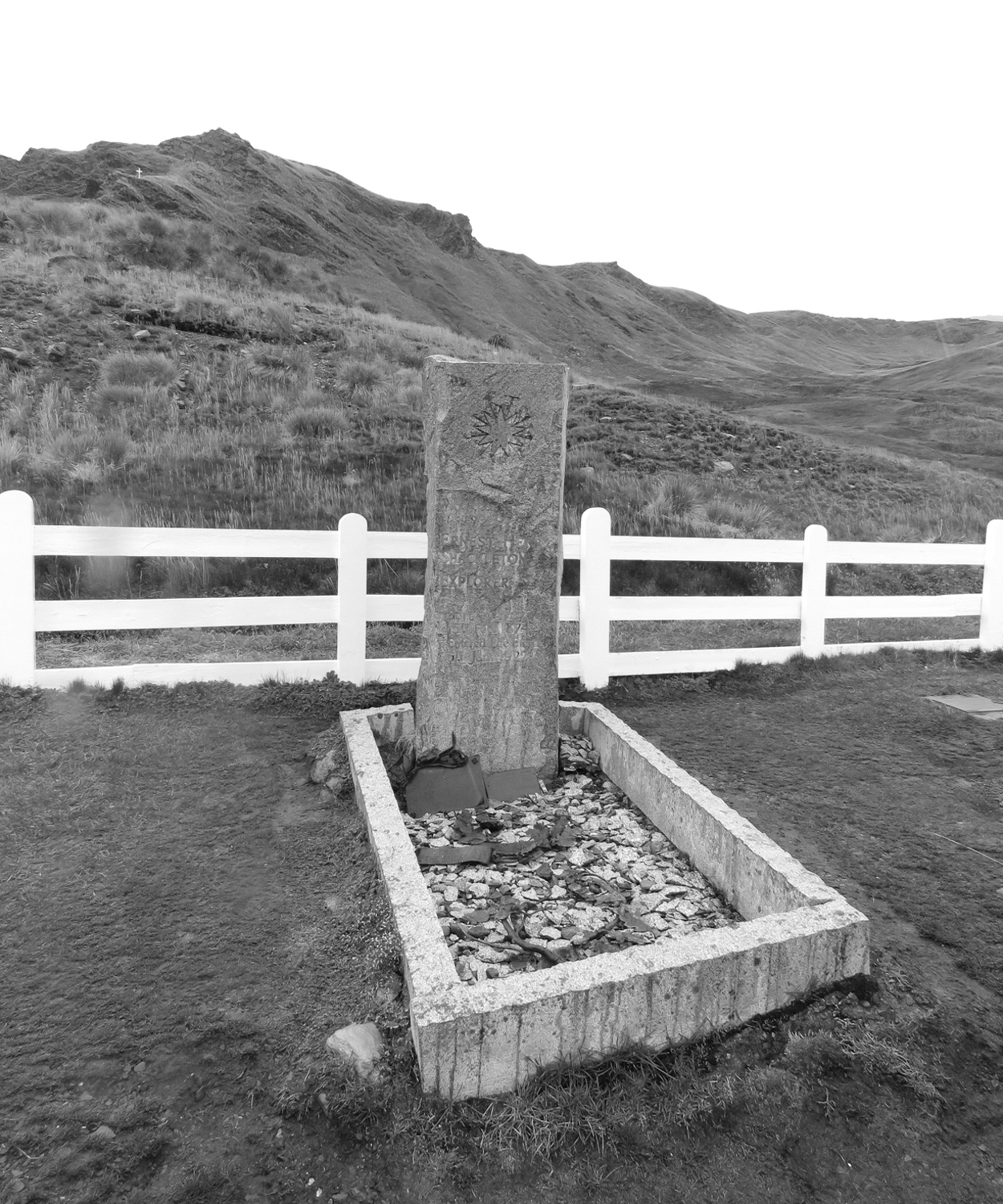
Homage to Ernest Shackleton & his expedition: Shackleton grave at Grytviken, South Georgia (3 Apr 18)
I will end on my favourite Bird photo of a Rainbow-bearded Thornbill taken on a memorable Birdquest tour to Colombia with my late good mate, Brian Field.
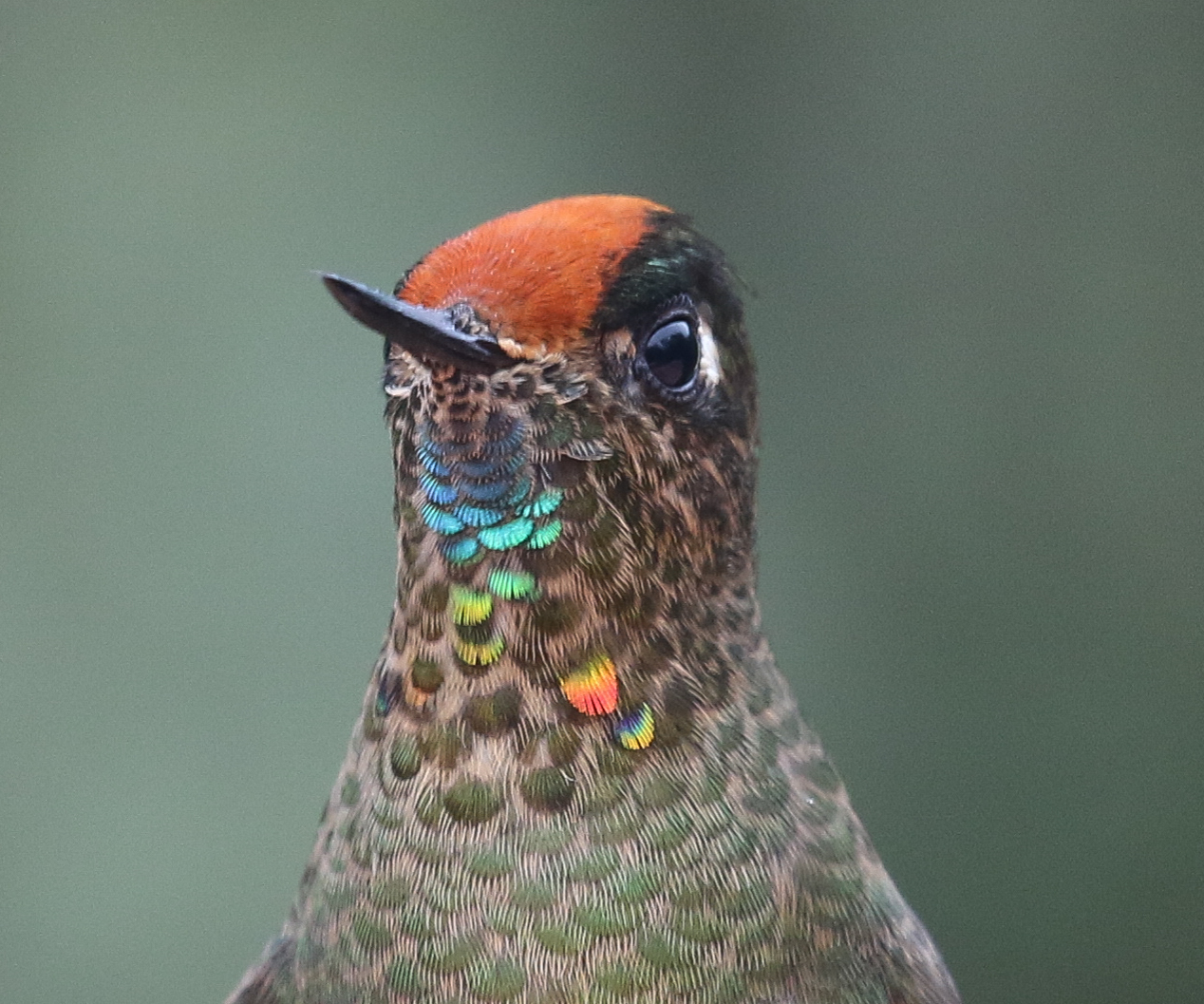
Rainbow-bearded Thornbill: Hotel Termales del Ruiz, Colombia (25 Feb 18)
Thanks for following the Blog. I hope you have enjoyed it over the years & here's to the next half million hits.

24 Dec 2018

24 Dec 18 - Index To My Beaked Whale Posts

This Blog Post is an Index to all the Blog Posts covering my Beaked Whale sightings. The following Blog Posts cover all my Rorqual Whale, Baleen Whale, Sperm Whale, Beaked Whale, Beluga Whale & Narwhal, Blackfish, Atlantic Dolphin, Pacific Dolphin and Porpoise Posts. The taxonomy follows the Marine Mammals of the World (Second Edition) book. There are links to the Posts against each entry below. Alternatively, you can click on a particular species in the Keywords section on the right side of the Blog to show all Posts for the selected species. Finally, selecting the Cetaceans Keyword to show all Cetacean Posts. I will continue to add to the photos and links as I write new Cetacean Blogs.
Cuvier's Beaked Whale: Male in Northern Biscay from the Brittany Ferry (15 Aug 18)
Cuvier's Beaked Whale: At the Estancia Harberton museum, Argentina (27 Mar 18)
Blainville's Beaked Whale: At sea off Mangareva, French Polynesia (17 Nov 14)
Blainville's Beaked Whale: At sea between Ascension Island and Cape Verde (25 Apr 18)
Gervais's Beaked Whale: At sea between Ascension Island and Cape Verde (28 Apr 18)
Gervais's Beaked Whale: At sea off the Canary Islands (4 May 18)
Strap-toothed Beaked Whale: A party at sea between Tristan da Cunha and St Helena (16 Apr 18)

16 Apr 2018

16 Apr 18 - Atlantic Odyssey - Day Eighteen: At Sea From Tristan Da Cunha To St Helena - Some More Strap-toothed Beaked Whales

I thought the previous day had been very quiet when I only saw five Seabirds. Today my personal total was only four Seabirds: with singles of Bulwer's Petrel, a Storm-petrel sp., Red-billed Tropicbird & a Tern sp. However, it was an excellent day overall for Cetaceans & other sealife.
Red-billed Tropicbird: This was distant & looking into the harsh light of the setting sun
On a couple of times during the Odyssey cruise, the Plancius had stopped for a few minutes to release a monitoring buoy & today we stopped to release another buoy. There are a number of nations that have released these monitoring buoys in recent years across all the oceans as part of scientific studies into the oceans and the motion of the oceans. There are over 3000 monitoring buoys currently in operation. They are planned to be released at exact pre-defined positions. Once released they submerge to preset depths, record a number of important properties of the ocean at the selected depth, before returning to the surface to broadcast the gathered information. This pattern is repeated as they drift with the ocean currents and thus provide important real time monitoring across all the oceans.
Monitoring buoy
There were some impressive clouds today
After a couple of days of not seeing any Cetaceans, they were back today. One of the highlights was a small pod of six Strap-toothed Beaked Whales. Unlike the Strap-toothed Beaked Whales seen on 8 Apr, these were better performers for the cameras, although I only managed to photograph five of the individuals.
Strap-toothed Beaked Whale: The initial view of the first individual
Strap-toothed Beaked Whale: A close up of the fin from the last photo showing it is pale coloured (in line with the fin of one of the Strap-toothed Beaked Whale from the 8 Apr)
Strap-toothed Beaked Whale: This second individual has a more strongly marked fin
Strap-toothed Beaked Whale: A closer crop from the last photo shows it has a more obviously marked pale fin again suggesting it is a Strap-toothed Beaked Whale
Strap-toothed Beaked Whale: More of the back & dorsal fin showing a couple of dark diatoms near the waterline
Strap-toothed Beaked Whale: A final shot of this second individual
I seem to remember looking at the above photos with the camera already zoomed into the central image. As I scrolled between my photos, the camera remained zoomed in. Just afterwards Hans showed me one of his photos with the Sharp-toothed Beaked Whale head on view. I was really impressed as it is often so difficult to photograph the beaks of Beaked Whales. What I was not expecting when I checked the photos on my laptop that evening was to see the full frame image from the previous two photos. A good reason never to delete photos when they are on the back of the camera & zoomed in.
Strap-toothed Beaked Whale: Wow. One of my more surprising photos from the Odyssey. There were three individuals in the last photo, not one. I will focus on each individual in turn
Focusing first on the left hand individual, which I think is a female as I cannot see a white tusk sticking up from the base of the beak.
Strap-toothed Beaked Whale: Close crop of the left hand third individual. The distinctive black face & white beak is diagnostic for Strap-toothed Beaked Whales. Typically, the lower face would be a paler grey, but none of my photos show that area. I can't see a white tusk sticking up from the beak so I think this individual must be a female
Strap-toothed Beaked Whale: Another shot of the left hand third individual showing the start of the grey back behind the bulky black melon
Strap-toothed Beaked Whale: Another shot of the left hand third individual showing its pale grey back contrasting with the black face & melon. There is a dark diatom on the side close to the waterline & a distinctive vertical black line behind the melon
Strap-toothed Beaked Whale: A final photo of the left hand third individual (a minute later) as it passes the tip of the fin of another individual
Now focusing on the right hand of the three individuals, which I think is also a female as I cannot see a white tusk. [Marijke has subsequently commented that there is a tooth visible in this photo sticking up from the base of the bill, but it is blackish coloured. This would make it a male. She confirmed that Hans has also got photographs of this individual & showing the tooth. I had overlooked it as I had been looking for a white tooth (or tusk). One tooth for males erupts from the beak & pushes up out of the beak to form a pair of tusks. In Strap-toothed Beaked Whales this pair of teeth can eventually curve over the beak on old males & wrap around it to make it very hard for the male to open their beaks more than a small amount. They still appear to be able to feed so presumably they are able to open the beaks just wide enough to suck in their food. One of those bizarre evolution traits where it looks like they have evolved beyond a sensible point. The Marine Mammals of the World second edition book doesn't say a lot about tooth colouration, but it shows photos with white teeth. I've no idea why this tooth is discoloured. The problem is so little is known about most species of Beaked Whales.]
Strap-toothed Beaked Whale: Close crop of the right hand fourth individual. There is a blackish tooth (tusk) so that would make this a male
Strap-toothed Beaked Whale: Even closer crop showing the blackish tooth just sticking above the line of the forehead which makes this a male
Strap-toothed Beaked Whale: Another shot of the right hand fourth individual which also shows the start of a grey back, but a less obvious melon
Strap-toothed Beaked Whale: A shot of the right hand fourth individual showing the variation in the grey of its back & the black melon, which doesn't look as bulky as on the left hand individual
Strap-toothed Beaked Whale: A fifth individual which has a smaller white beak & a less extensive black melon. Presumably this is an immature individual
Strap-toothed Beaked Whale: Fifth individual. A bit more of the beak & melon
Strap-toothed Beaked Whale: Following Marijke's comments about that the fourth individual was a male with a blackish tooth, then I've looked again at this fifth individual & now believe it is an immature male as I can see a blackish tooth (the bump in the forehead shape) indicating it is a male
Strap-toothed Beaked Whale: More of the fifth individual. Unfortunately, I don't have an image of its dorsal fin
It was really exciting to be able to get such great photographs of this distinctive species. Especially as the Strap-toothed Beaked Whales on 8 Apr had not preformed that well for us.

8 Apr 2018

8 Apr 18 - Atlantic Odyssey - Day Eleven: At Sea From South Georgia To Gough Island - Strap-toothed Beaked Whale

We saw a good selection of Seabirds species on the penultimate day at sea on the crossing from South Georgia to Gough Island (as detailed in the previous Post). However, the Seabirds are not the main reason why I will remember the day. The main reason is I saw my first Strap-toothed Beaked Whales which helped to start getting me more hooked on Cetaceans. I've had a lot of enthusiasm to see Cetaceans for over 20 years since the annual trips I was going on in the late 90s to the Spanish port of Biscay from Portsmouth. However, by the time I left the Plancius I was really hooked on Cetacean watching from boats. This is going to be an expensive new passion.
Strap-toothed Beaked Whale: The initial view on the surface before it quickly disappeared
Strap-toothed Beaked Whale: Fortunately, it came up again fairly close to the ship. Another typical Beaked Whale view, which gives a rough idea of the size, shape & that it is a Beaked Whale. But not enough to identify it on these views
Few things got me more excited when I was on deck than a shout for a Beaked Whale. I tried to get onto the Beaked Whale quickly, as generally you don't get long views & then to grab as many photos as possible to assist with the subsequent identification. There are 22 species of Beaked Whales & the group includes many of the least known Cetaceans. Beaked Whales tend to live in deep water, are generally unobtrusive as despite being a medium-sized Cetacean (between 4-13 metres in length), they don't seem to have strong blows like the big Whales, generally don't jump out of the water like Dolphins, generally don't seem to associate with boats like Dolphins or hang around on the surface like some of Blackfish group of Cetaceans. What they are good at is generally not spending a lot of time on the surface, quietly & quickly disappearing back under the water, occur on their own or in small groups & are generally tricky to identify. Given how tricky they can be to identify & the brevity of views, then getting good photos is crucial. It will also be very useful in then allowing the records to be documented & submitted (Marijke & Hans from the Expedition staff were diligently recording lat/long positions of the Cetaceans, Turtles & good Seabirds, Sharks etc on the Odyssey). In some cases, Marijke said she would have to forward the photos of some of our Beaked Whale sightings to Beaked Whale experts to hope they would be able to identify then.
Strap-toothed Beaked Whale: One of the most important parts to photograph on a Beaked Whale is the beak. However, this involves knowing when & where it will surface, so that you can be photographing the beak as it breaks the surface. This is very hard to get right. Most people's photos of Beaked Whales will start with the back & fin, as by the time you see it appear & react the beak has already disappeared back below the surface
Strap-toothed Beaked Whale: I seem to remember Hans dashing into the bridge & asking them to stop the Plancius as the Beaked Whales were close to the ship. Fortunately, they did & we had an incredible performance
Strap-toothed Beaked Whale: Very quickly this individual just quietly slipped below the water again
Having just started watching from the bridge wings, I found out the good way what a great viewpoint this was for seeing Cetaceans. It was a good high viewpoint & overall it allowed much better views of Cetaceans. Often they would be lost in the waves from the lower decks. Plus either Marijke or Hans, both excellent experienced Cetacean watchers, were almost always on the bridge wings when we were at sea. Having worked out it was the best viewpoint on the ship for me, I rarely spent time elsewhere on the other decks for the rest of the trip. The other bonuses of the bridge wings for me were Marijke & Hans were spending more of their time looking for Cetaceans. As the trip progressed, I was also focusing more on Cetaceans, once any potential new Birds had been seen. Finally, both Marijke & Hans were very keen to share their extensive knowledge on identification & behaviour of the Cetaceans we were seeing. My Cetacean knowledge grew significantly during the Odyssey & subsequent West African Pelagic.
Strap-toothed Beaked Whale: This individual popped up unexpectedly close to the Plancius & I didn't manage to get it all in. It is just possible to see some pale colouration on the rear of the fin
Strap-toothed Beaked Whale: This pale colouration on the rear of the fin is one of the features of Strap-toothed Beaked Whale
The next photos are of a second individual: there is a lot of pale colouration on the body in front of the fin & the fin has a different shape.
Strap-toothed Beaked Whale: Note the paleness on the sides of the body in front of the fin. This is another feature of Strap-toothed Beaked Whale
Strap-toothed Beaked Whale: Another photo of the sides of the body
Strap-toothed Beaked Whale: A close up of the fin of the second individual showing the distinctive kink in the back of the fin. Note, the paleness on the body doesn't continue behind the fin & the fin is dark
This individual appeared at right angles to the Plancius.
Strap-toothed Beaked Whale: The blow hole is just visible
Strap-toothed Beaked Whale: Finally the fin appears
Strap-toothed Beaked Whale
Strap-toothed Beaked Whale: Another surfacing individual
Strap-toothed Beaked Whale: The fin breaks free of the water & looks like this is the individual with the pale rear fin
Finally, this individual surfaced & allowed another important id feature to be photographed.
Strap-toothed Beaked Whale: Another feature of Strap-toothed Beaked Whale are the diastoms on the body
Strap-toothed Beaked Whale: A close up of the diatoms
Strap-toothed Beaked Whale: Another photo of the diatoms. These diatoms are caused by patches of microscopic algae
It was great to see a new Beaked Whale & to get these great prolonged views. It is believed that Strap-toothed Beaked Whales have a continuous distribution in the Southern Oceans from 35 to 60 degrees South. They largely eat squid, but are thought to also eat fish & crustaceans.

The day after I drafted this Post, I had an email from Marijke who had followed on these Strap-toothed Beaked Whales by sending photos of them, including some of my photos, to a couple of Beaked Whale experts. Here was the response:-
Many thanks for your contribution of photographs regarding our beautiful Beaked Whale encounter on 8 April 2018 when we were in transit to Gough Island. Their identification has been confirmed. They are Strap-toothed beaked whale (Mesoplodon layardii). It was a group of sub-adults/females. Based on an encounter earlier this year, Beaked Whale expert Robert Pitman learnt more about the colour development of these Whales off Australia and now our encounter has taught him even more. I also have discussed this encounter with Todd Pusser - who has studied stranded Beaked Whales. They both are now quite convinced they were Strap-toothed Beaked Whale. The white of the beak, the white-tipped dorsal and the strong black-and-white patterns develops with age. This explains why some Whales did not have a white tipped dorsal yet and why it was visible on only one Whale although only faint. Marijke