The original plan was we were going to have a proper breakfast before heading off on the long drive to Huambo. It would be a driving day with a few roadside stops on the way. But we hadn't seen the endemic Gabela Bushshrike & this was our last chance of seeing one. This was even more frustrating for me as Niall left the site before it was dark the previous evening. After a discussion that evening, the plans were changed to a pre-dawn departure from the accommodation to return for another look for a Gabela Bushshrike at the site where Phil & Richard had managed to get poor untickable flight views & which I had missed completely from standing in a slightly different location. We had about ninety minutes that morning to try & see it, which felt tight. We did heard three start singing about thirty minutes after dawn, but again the first two were very skulky & refused to come out from deep cover. Finally, we tried to look for the third individual from the main track & were all very relieved when Richard said "I've got it": especially as there was only about fifteen minutes left before Niall wanted to leave. That was the last endemic that we needed to see at the Kumbira Forest. We had good views of it, but I failed to get any photographs before it too disappeared from view. Finally, we were happy to leave the forest. It was about an hour of driving to get back to the Fazenda Rio Uiri accommodation to collect our bags & enjoy a rare sit down proper breakfast.
On paper, we had a two hundred mile journey to get to Huambo which was to be our base for the following three nights & two days of Birding. Google Maps said it was about a five hour journey. But Google Maps doesn't allow the time for Birding stops.
The Dombi track crossed this small stream which was quite productive Birding
Phil & Richard (background) further along the track
Some of the Miombo woodland
That's more of the forest gone for firewood or charcoal
The road from Conda quickly left the remains of the Kumbira Forest and surrounding farmland and headed South East through grassland with very large rocks or kopjes. After a while, we turned onto a side track near Dombi which crossed a small river and continued through some light Miombo woodland. This was very productive and we saw at least one Western Miombo Sunbird, a single Anchieta's Sunbird, two African Spotted Creepers and a Miombo Tit, plus, we had better views of two Southern Hyliolas.
Angola Batis: Male. Males are hard to tell from the very similar Chinspot Batis. They can be separated by their short white supercilium, rather than long, white supercilium that a male Chinspot Batis shows. If they have a female with them, the identification is easier as a female Angola Batis does not have the orange chin spot that gives the Chinspot Batis their name. This monotypic species occurs from Forests of West Angola, to the adjacent Democratic Republic of the Congo & South East Gabon
Miombo Tit: This monotypic species occurs in Angola, Zambia, South East Democratic Republic of the Congo, Tanzania, Zimbabwe & Mozambique
African Spotted Creeper: This was one of the species I was most keen to see, having failed to see it on my first trip to Kenya. Unfortunately, there was long grass in the foreground of this photo
African Spotted Creeper: This is the nominate salvadori subspecies which occurs in Angola, Zambia, Malawi to West Kenya, Tanzania & extreme East Uganda
Greencap Eremomela: This is the pulchra subspecies which occurs in Angola, Democratic Republic of the Congo, Zambia, West Malawi, North East Namibia & North Botswana
Southern Hyliota: This is the inornata subspecies which occurs from Angola to South Democratic Republic of the Congo, Zambia, Malawi & North Mozambique
Southern Hyliota: This is one of four species in the family of Hyliotas
Western Violet-backed Sunbird: This is the angolensis subspecies which occurs from Gabon, South Democratic Republic of the Congo, Angola to West Tanzania & West Malawi
Western Violet-backed Sunbird
Yellow-throated Petronia: This is the rufitergum subspecies which occurs in South Democratic Republic of the Congo, South West Tanzania, North Malawi, Zambia, Angola & North West Botswana
Bronze Mannikin: Immature. This is the scutate subspecies which occurs from Ethiopia & adjacent South East Sudan and Eastern South Sudan to Angola, North & East Botswana & East South Africa
Broad-tailed Paradise Whydah: This monotypic species occurs from North Angola & Democratic Republic of the Congo to South West Uganda, Kenya & North East South Africa
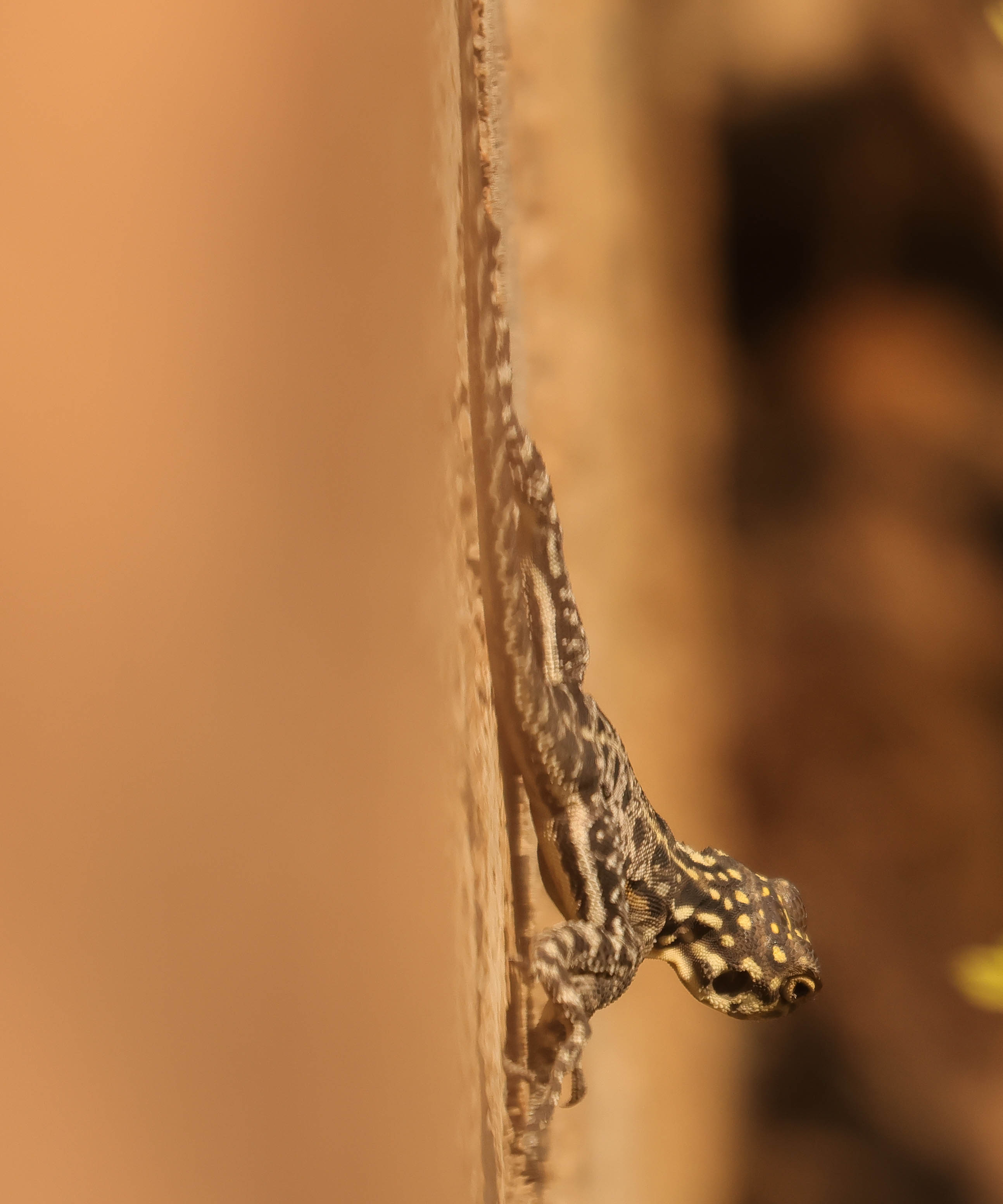
Namib Rock Agama: Female. This Lizard quickly moved to the vertical side of the bridge. Information on Angolan Agamas & their taxonomy is limited. While this appears to be a too far North to be a Namib Rock Agama, it still appears to be the most likely species. Thanks to my mate Steve Morrison who has helped to identify a number of the Lizard species from my published photos
Yellow Pansy: Thanks to my mate Steve Morrison who was able to identify a number of the Butterfly species from my published photos
Blue Pansy: Thanks to my mate Steve Morrison who was able to identify a number of the Butterfly species from my published photos
After a couple of hours, we had to leave. It was too short a time at this patch of Miombo woodland and we all wanted longer. But we had compromised our time for the day with the final attempt for the Gabela Bushshrike. We still had around two-thirds of the driving to do and some other sites we wanted to stop at. I will cover the rest of the day in the next Blog Post.