Showing posts with label Lesser Whitethroat. Show all posts

3 Apr 2014

3 April 14 - Photospot1: The Lesser Whitethroat Complex

Several times since I started birding, the Lesser Whitethroat complex have changed from being subspecies of Lesser Whitethroat to being split into multiple species. The latest Clements taxonomy has split off Hume's Lesser Whitethroat & Desert Lesser Whitethroat from Lesser Whitethroat. On my Indian trip, I was lucky enough to be able to see all 3 Indian species & photograph them. Here are the photos.
Lesser Whitethroat: CEDO, Gujarat (19 Jan 14). Note, the noticeable face patch & browner wings
Desert Lesser Whitethroat: Desert Coursers, Gujarat (16 Jan 14). This bird is paler grey than UK Lesser Whitethroats & doesn't have the same contrasting face patch
Desert Lesser Whitethroat: Desert Coursers, Gujarat (16 Jan 14). The slightly darker tail is another separating feature from Lesser Whitethroat
Desert Lesser Whitethroat: Desert Coursers, Gujarat (16 Jan 14)
Desert Lesser Whitethroat: Tal Chappar, Rajasthan (25 Jan 14)
Hume's Lesser Whitethroat: Jungle Hut (29 Dec 13). Perhaps the easiest of the three to identify on wintering grounds as it's the only one which winters in the Western Ghats
Here is a Lesser Whitethroat photographed in my garden in Dorset in November (which is a really late record for the UK). It's possible it could be one of the Eastern subspecies of Lesser Whitethroat, but also possible it's a very late departing nominate curruca subspecies. Frustratingly, I didn't see it again.
Lesser Whitethroat: Dorset (10 Nov 13)

19 Jan 2014

19 Jan 14 - Close Waders & Rock Eagle Owls

By early afternoon we were heading out again to head off to a large lake near to CEDO & its surrounding bushes & dried grassland. The good thing I had seen both of the 2 likely ticks on the first morning: Sykes's Lark & White-naped Tit. Therefore, the pressure was off & I could just enjoy the birding & photography. On the way to the lake we stopped in a small basic village. I couldn't see why we were stopping at first, but when I looked on both sides of the road were small wet pools under the trees. Despite being in the village, there was a good selection of Waders present. Clearly, they are very tolerant of the villagers & the villagers aren't a threat to them.
The wet pools were right next to the road
Not surprisingly we attracted the attention of some of the local kids
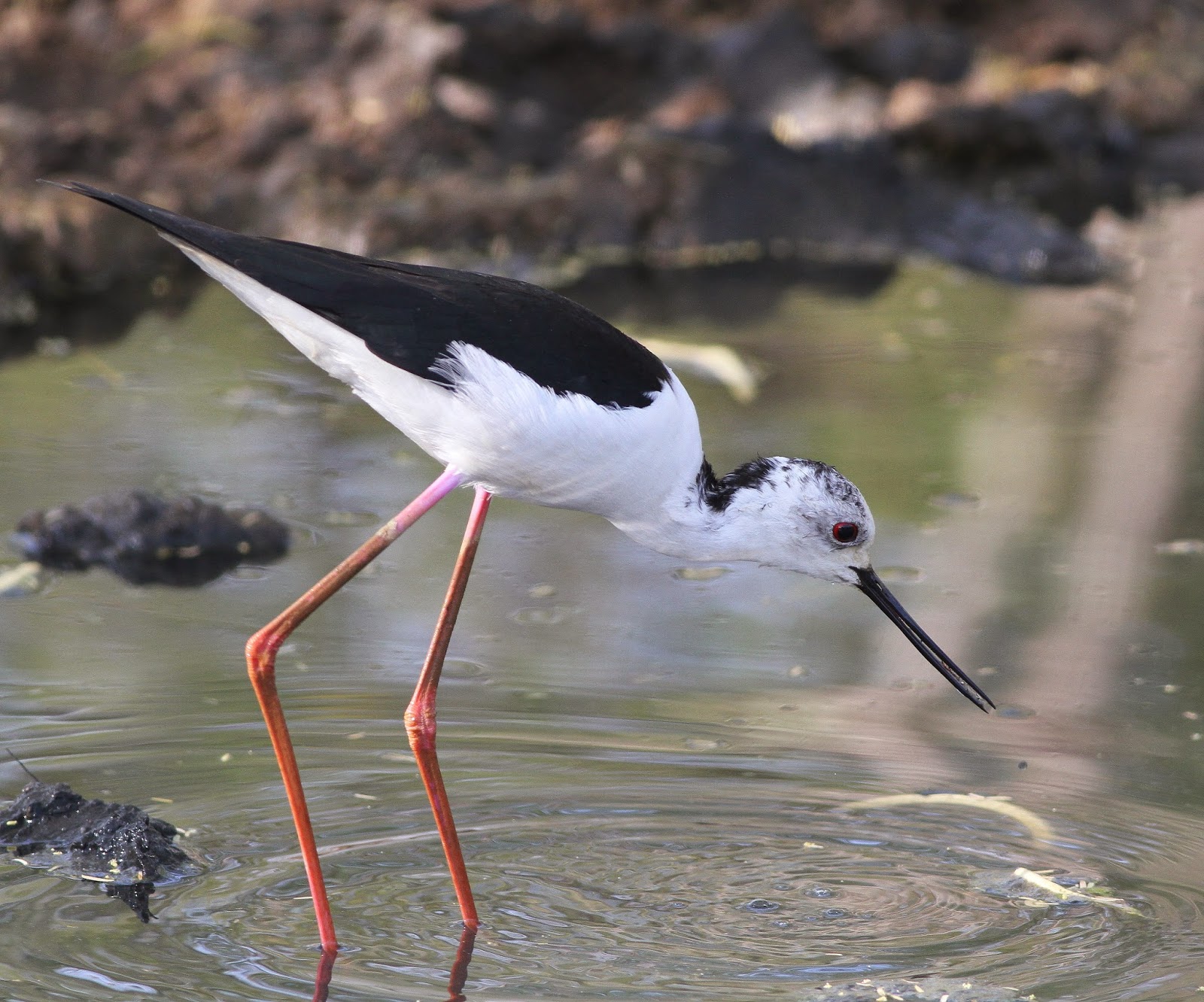
Black-winged Stilt
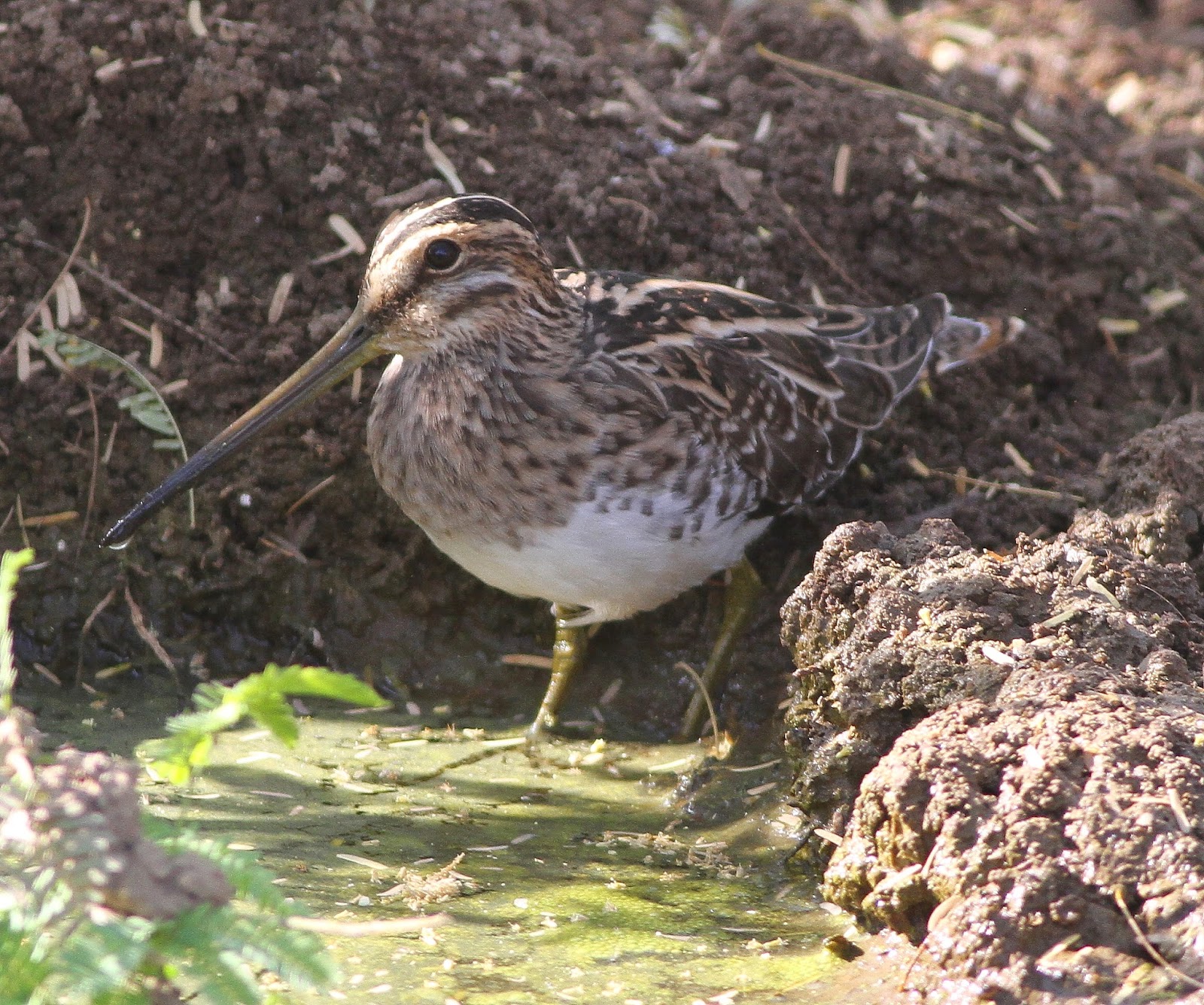
Snipe: The other similar Snipe species are out of range
Common Sandpiper
Green Sandpiper
Marsh Sandpiper
Citrine Wagtail
Finally, we were heading onto the lake, having had our fill of close Waders. The lake is surrounded by a large area of dry grassland & scattered bushes on a sandy soil, although the grass was largely dead. There were also scattered hills of varying sizes & one small hill was particularly good. It reminded me of the kopjes of Africa where small stoney hills project from the African plains & have their own distinct local wildlife.
The majority of the area was scattered bush country & dried grassland
With some quite large hills
This smaller hill had its own Persian Red-tailed Wheatear & Eastern Pied Wheatears
Persian Red-tailed Wheatear: This is the chrysopygia subspecies
Persian Red-tailed Wheatear: This is a winter visitor to Pakistan & NW India
As we were driving towards the lake, the driver spotted a Rock Eagle Owl trying to keep out of the sun by a low bush. Clearly, there is good feeding in this area, as we saw a second bird on the way out & 2 more on the following morning.
Rock Eagle Owl: Roosting by the bush
Rock Eagle Owl: As we got closer it tried to hide in the bush, but was clearly watching us
Rock Eagle Owl: The second bird was out hunting in the late afternoon
Rock Eagle Owl: It finally got bored of the attention
There were a good selection of other birds around the lake, although the Water birds were too far away to photograph.
The Tower hide
Pallid Harrier: I was struck how slim & buoyant this Harrier going to roost was when taking the photos. This is a female bird as it has a streaky breast & belly. The dark secondaries on the underwing separate it from a female Montagu's (which has pale secondaries)
Pallid Harrier: Really magnifying this I can see the trailing edge of the secondaries gets broader towards the base of the wing & there isn't much of a central pale band along the middle of the secondaries (a female Montagu's Harrier is photographed in the An Enigmatic Family Year Tick post)
Steppe Eagle: The long gape line, stout bill, grey coverts & white lines in the wing point to a subadult Steppe Eagle
Short-toed Lark: A fairly common lark in the more open areas
Crested Lark: Less common, but still a few around the more open areas
Crested Lark: That's an odd looking shadow
Sykes's Warbler
Lesser Whitethroat: The distinct mask separates it from Desert Lesser Whitethroat (or a migratory Hume's LWT). The most likely subspecies in Gujarat is blythi
On the way back to CEDO, we ran into this Jackal by the roadside as the light was starting to fade.
Jackal

10 Nov 2013

10 Nov 13 - Hello & Goodbye

Today, the conditions were looking promising for Woodpigeons to be on the move and I was out early at South Haven: my regular migration viewpoint at the Northerly tip of Studland. Before I moved to Dorset in 1996, I had assumed that our Woodpigeons are basically a static British species that do not migrate. In the last decade, I realise that isn't the case. Locally, in early November, Dorset can get vast movements of tens of thousands of Woodpigeons heading South & West depending on the weather & wind conditions. My best day was early Nov 2011, when I had 26,800 in a 2.5 hour window moving along the Sandbanks peninsula at the Poole Harbour mouth. The bulk moved over SW over Brownsea, but smaller numbers continuing South over Studland. Flocks often exceeded 1000 on that date. Unfortunately, while the Woodpigeons were on the move today, they were moving further West through Poole Harbour & were too distant to pick up from my regular viewpoint at South Haven. I later ran into this small flock of about 250 birds.
Woodpigeon on the move: I've leave you to do the exact count
Just to confuse the situation, Woodpigeons can be seen throughout the year flying across the Poole Harbour mouth, but these are birds moving locally to feed. They fly both ways and are nice & low and in small parties or on their own. This contrasts with the birds on the move, which are in large parties and generally very high.
Woodpigeon: This one was on a local feeding trip across the harbour mouth today
The general feeling is the moving Woodpigeons are British birds which are moving South for the winter as people haven't seen big flocks arrivals on the East coast from Northern Europe. As for where they are heading, I think some head to the SW for the winter, whereas others head South to Europe & presumably also Spain. In previous Autumns, I've seen thousands of birds moving South across Swanage & observers at Durlston have seen them heading out to sea. Not all make it across the channel, as on a number of occasions when the weather has been mixed, I've seen flocks returning and dropping rapidly into the local woods & fields. I can only conclude is they have hit adverse conditions out at sea & turned back. Often on those days, as the weather improves, birds will collect up to try heading South again. So while I was disappointed to not see the Woodies on the move, South Haven was still interesting. Just outside the harbour mouth this Great Northern Diver was happily feeding close to the shore.
Great Northern Diver
While photographing the Great Northern Diver, this juvenile Red-throated Diver popped up in the same place.
Red-throated Diver: Juvenile
Popping home for some food, I wasn't surprised to see a couple of Red Admirals feeding on the ivy in the garden. Ivy is a great plant help sustain Butterflies and other insects at this time of year. Well worth growing some in your garden.
Red Admiral
What was a total surprise was seeing a warbler in my apple tree. Grabbed the bins & realised it was a Lesser Whitethroat. Most Lesserthroats pass through Dorset in mid Aug - mid Sept and it's unusual to see one in Nov. There was one at Portland Bill a few days ago, but given that's one of the best migration spots on the South coast, that is more understandable. This is only my second garden record and I only heard the first one singing. So I was very happy with this bird.
Lesser Whitethroat
Lesser Whitethroat
Given that date, there is a chance this might be one of the Eastern races of Lesser Whitethroat, rather than a late British bird. However, you need to see the wings & tail very well to try and figure out the race. Although it was side on when I first saw it, I didn't watch it with the bins as I was more interested in grabbing the camera. So sadly I will never know, unless it reappears again.