Showing posts with label Citrine Wagtail. Show all posts

15 Sept 2022

15 Sep 22 - A Dorset Citrine Wagtail

Late morning on 15 Sep, news broke of a potential Eastern Yellow Wagtail at Lodmoor. I quickly headed down to find there was a debate around whether it was Dorset's first Eastern Yellow Wagtail or one of very few Citrine Wagtails that had occurred in Dorset. At one point, it had showed well with a party of thirty or so Yellow Wagtails, but the Wagtails had flushed to land further back on the marsh, in slightly longer vegetation or dispersed from the area. It hadn't been seen since this point. To add to the pain of missing it, was the chance to look at photos on the back of Pete Coe's camera. My initial impressions at this point was it looked like a Citrine Wagtail.

After a long wait, Brett Spencer who had originally found it, managed to relocate it away from the main Yellow Wagtail party. We had good views about twenty to thirty metres away onto the marsh over the next hour. The identification debate continued for a few days, but it changed to whether it was a Citrine Wagtail or a hybrid individual. Part of the problem was the head pattern looked good on the right hand side of its head. However, the facial pattern was less clear cut on the left hand side of the head.
Citrine Wagtail: Showing its good side of the head. It was walking right on every occasion I took photos
Citrine Wagtail: This is only the fifth or sixth record for Dorset, depending on whether a record inherited from an annexation of Hampshire can be treated as fully a Dorset record: this would make a good, yet pointless, pub debate
Over the next few days, the general opinion settled down on it being a Citrine Wagtail. Finally, news came through on 26 Sep, that Magnus Robb has listened to recordings that Nick Hopper had made & Magnus was happy with the identification a Citrine Wagtail. Magnus is probably the leading sound expert in Europe.
Citrine Wagtail
There have only been the following Citrine Wagtails in Dorset:
  • Two first Winter individuals at Stanpit on 15 Oct 66: this record was inherited from Hampshire when the Dorset boundaries were expanded in Apr 74
  • One at Lodmoor on 6 May 09
  • One at Portland Bird Obs on 11 May 14
  • One at Lodmoor on 1 Sep 16
  • One at Portland Bill on 25 Aug 22.

11 Apr 2014

11 April 14 - A Morning At Yotvata

Another early start saw us heading to an early breakfast, so we didn't have to raise back to Eilat mid am for a late breakkie. Then it was back North to Yotvata. The sewerage works were the main location with another attempt to photograph a Little Crake. There were also a number of other species present at the sewerage works, as well as in the nearby kibbutz. We also had a look at the dunes next to one of the circular fields, but making sure that we didn't stray across the border. 
Looks like there was a formal border crossing at one point
The dunes nearby: Apparently the border is just a low fence in the dunes
Garganey: Male. My favourite Western Palearctic dabbling Duck
Osprey: Adult. Just in case you have forgotten what they look like since the photos a few posts ago
Marsh Harrier: Male of the nominate aeruginosus subspecies
Marsh Harrier: Male. Sand dunes aren't the normal habitat!
Little Crake: Female. The grey face of the males extends down to the breast
Spur-winged Plover
Wood Sandpiper
Little Green Bee-eater
Pied Wagtail: The White Wagtail alba subspecies
Yellow Wagtail: The Black-headed subspecies feldegg
Citrine Wagtail: Male. This looks like the werae subspecies which has a greyer mantle (whereas the nominate citreola has an olive or brown tinge to the grey mantle). Also werae has a less extensive black nape (which doesn't extent onto the sides of the breast)
Citrine Wagtail: Male. The werae subspecies is the commoner subspecies in Winter & on migration, but the nominate citreola does occur on migration
Rufous Bushchat
Masked Shrike: Female. Males would have black, rather than grey upperparts & would be deeper orange on the flanks 
Masked Shrike: Female. She finally moved to a natural background
Ortolan
Ortolan: Another photo of the same bird. The streaks on the breast indicates this is a 1st year bird which still retains some of the 1st Winter plumage
The next stop was the Caspian Plover area at the start of the Ovda Road, but very close to the start of the turnoff this time. We had met some Swedish birders the previous evening, who had seen a party of Scrub Warblers in the bushes in this area. A quick look & we located the birds, which remained quite skulky.
Scrub Warbler: This is the inquieta subspecies. Not a great photo, but it shows the prominent streaking on the crown, whitish supercilium, dark line through eye & dark eye. The Moroccan birds we saw earlier in the year had fine streaking on the crown, an indistinct buffy supercilium & weaker eye stripe
Whinchat: They will soon be passing through Dorset again
We returned to Eilat along the Ovda road that goes via the Eilat Mountains. This gave us another chance to have a look for the Hooded Wheatear, but this time we saw it. With the border fence in the background & being right next to the army checkpoint, I decided it would be better to leave the camera in the car: especially as it would have been a poor photo as it wasn't close.
Desert Lark: The birds found in the Southern Israeli deserts & the Sinai are intermediate between the deserti subspecies we saw in the Dead Sea area & the isabellinus subspecies of North & West Eqypt & SW Saudi Arabia
Desert Lark
Crested Lark: This is the brachyura subspecies which occurs in the Southern Deserts of Israel as well as North Libya to coastal Egypt, North Sinai, North Saudi Arabia & South Iraq. Other subspecies occur further North in Israel
Dorcas Gazelle: Mum & youngster. When they saw us they headed off into the desert, which we couldn't consider following as this is all firing ranges
A lot of the desert on both sides of the road was off limits during the week due to the firing range

19 Jan 2014

19 Jan 14 - Close Waders & Rock Eagle Owls

By early afternoon we were heading out again to head off to a large lake near to CEDO & its surrounding bushes & dried grassland. The good thing I had seen both of the 2 likely ticks on the first morning: Sykes's Lark & White-naped Tit. Therefore, the pressure was off & I could just enjoy the birding & photography. On the way to the lake we stopped in a small basic village. I couldn't see why we were stopping at first, but when I looked on both sides of the road were small wet pools under the trees. Despite being in the village, there was a good selection of Waders present. Clearly, they are very tolerant of the villagers & the villagers aren't a threat to them.
The wet pools were right next to the road
Not surprisingly we attracted the attention of some of the local kids
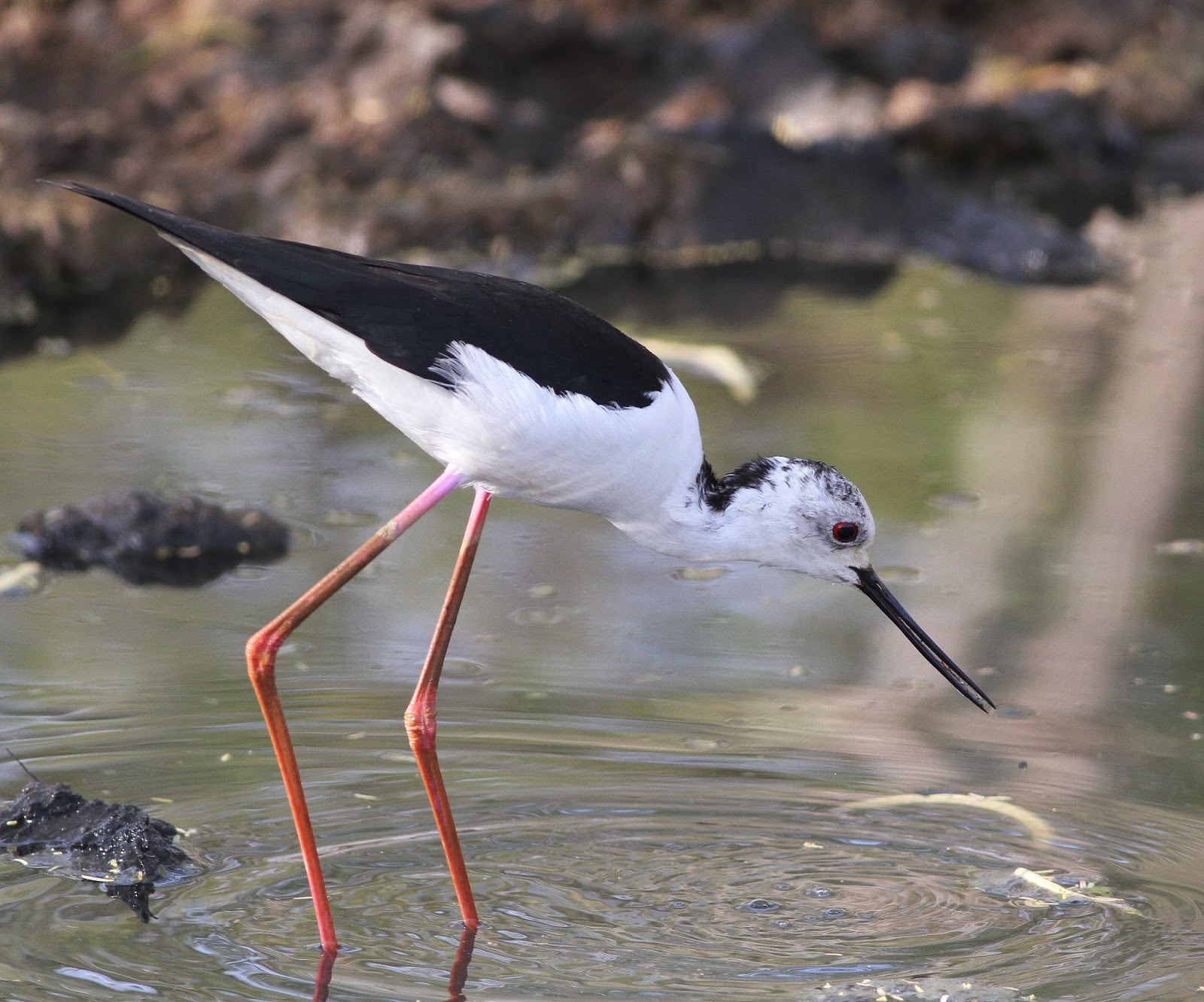
Black-winged Stilt
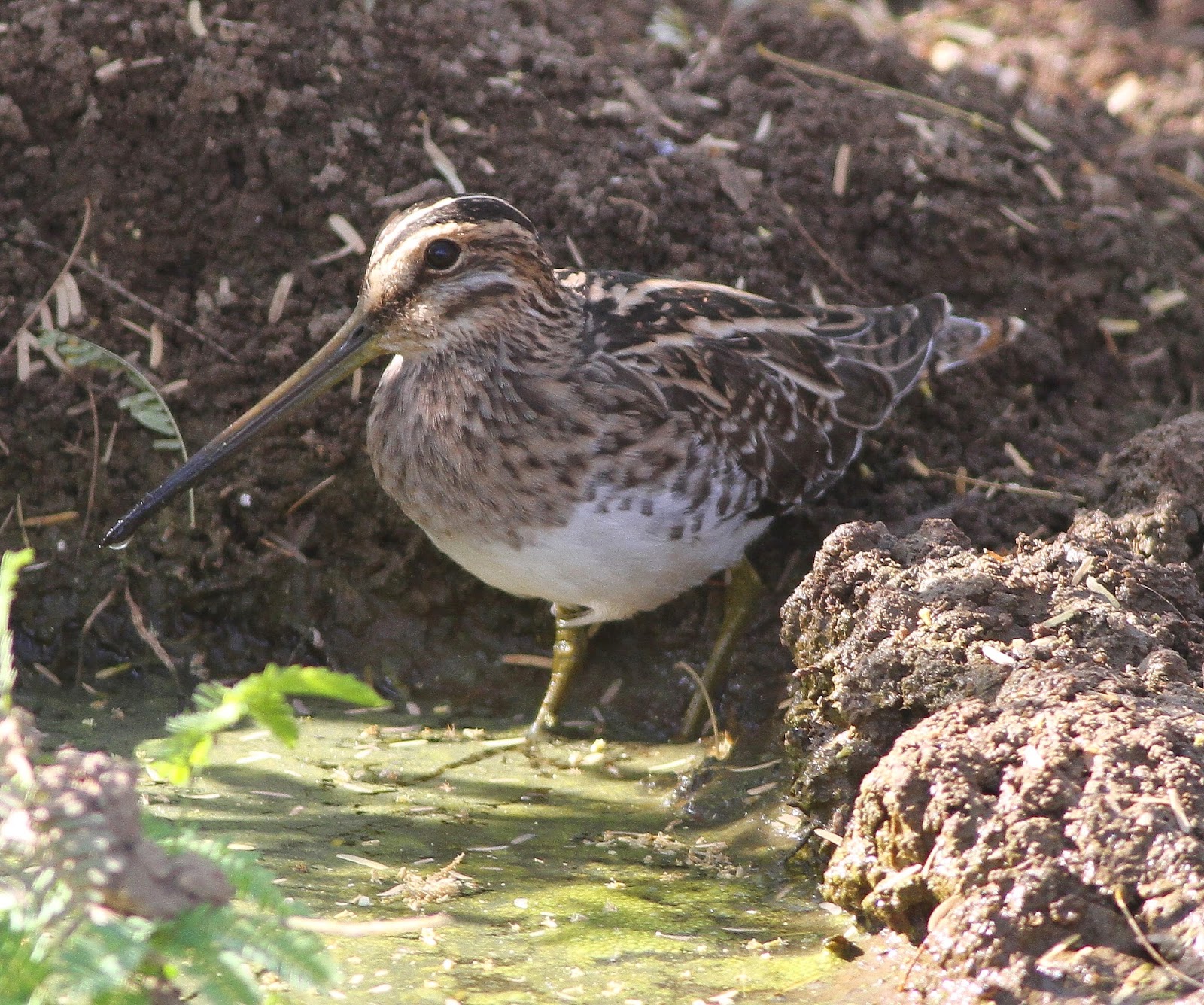
Snipe: The other similar Snipe species are out of range
Common Sandpiper
Green Sandpiper
Marsh Sandpiper
Citrine Wagtail
Finally, we were heading onto the lake, having had our fill of close Waders. The lake is surrounded by a large area of dry grassland & scattered bushes on a sandy soil, although the grass was largely dead. There were also scattered hills of varying sizes & one small hill was particularly good. It reminded me of the kopjes of Africa where small stoney hills project from the African plains & have their own distinct local wildlife.
The majority of the area was scattered bush country & dried grassland
With some quite large hills
This smaller hill had its own Persian Red-tailed Wheatear & Eastern Pied Wheatears
Persian Red-tailed Wheatear: This is the chrysopygia subspecies
Persian Red-tailed Wheatear: This is a winter visitor to Pakistan & NW India
As we were driving towards the lake, the driver spotted a Rock Eagle Owl trying to keep out of the sun by a low bush. Clearly, there is good feeding in this area, as we saw a second bird on the way out & 2 more on the following morning.
Rock Eagle Owl: Roosting by the bush
Rock Eagle Owl: As we got closer it tried to hide in the bush, but was clearly watching us
Rock Eagle Owl: The second bird was out hunting in the late afternoon
Rock Eagle Owl: It finally got bored of the attention
There were a good selection of other birds around the lake, although the Water birds were too far away to photograph.
The Tower hide
Pallid Harrier: I was struck how slim & buoyant this Harrier going to roost was when taking the photos. This is a female bird as it has a streaky breast & belly. The dark secondaries on the underwing separate it from a female Montagu's (which has pale secondaries)
Pallid Harrier: Really magnifying this I can see the trailing edge of the secondaries gets broader towards the base of the wing & there isn't much of a central pale band along the middle of the secondaries (a female Montagu's Harrier is photographed in the An Enigmatic Family Year Tick post)
Steppe Eagle: The long gape line, stout bill, grey coverts & white lines in the wing point to a subadult Steppe Eagle
Short-toed Lark: A fairly common lark in the more open areas
Crested Lark: Less common, but still a few around the more open areas
Crested Lark: That's an odd looking shadow
Sykes's Warbler
Lesser Whitethroat: The distinct mask separates it from Desert Lesser Whitethroat (or a migratory Hume's LWT). The most likely subspecies in Gujarat is blythi
On the way back to CEDO, we ran into this Jackal by the roadside as the light was starting to fade.
Jackal