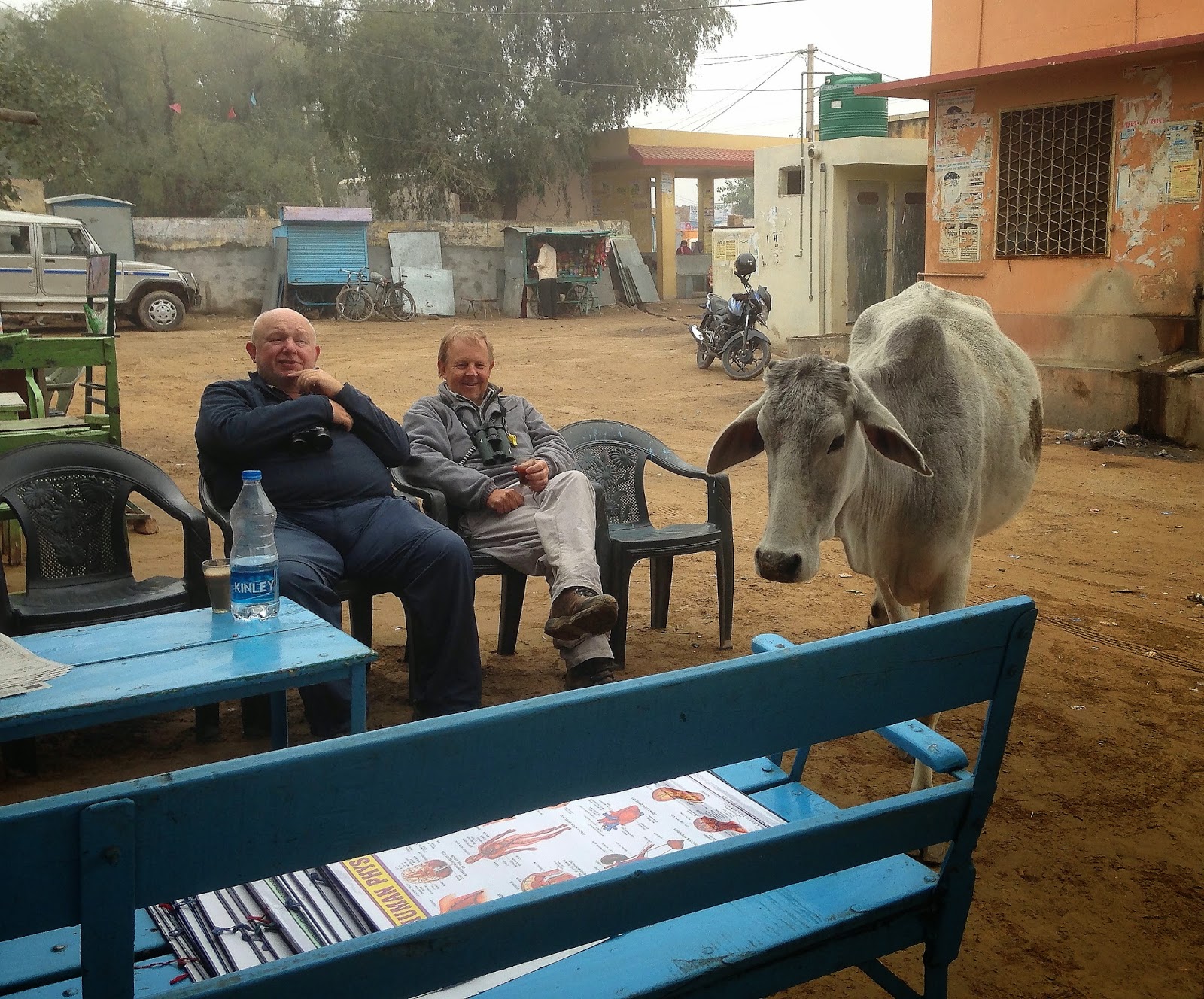
Having completed all the daily posts on my recent Indian trip, I thought I would put a post together of all the mammals I photographed on the trip to Calcutta, the Andamans, the Western Ghats, Gujarat & Rajasthan. I only spent a couple of half days birding around
Calcutta, but I saw a Brown Rat at about 04:00, as I was waiting for
the night watchman to open my hotel on my first night. The only other mammal in Calcutta was an Indian Mongoose. On the Andamans, a Five-striped Palm Squirrel & some unidentified Bats were the only mammals seen. However, I saw a good
variety of mammals on the rest of the trip. In total, I managed to photograph 27 species (excluding the Water Buffalo) & saw another 6 species. Here are the mammals I did get to photograph. No doubt my mates, Richard Webb & John Wright, will tell me if there are any misidentifications.
 Rhesus Macaque: Bharatpur, Rajasthan (27 Jan 14)
 Bonnet Macaque: Travelling from Jungle Hut to Ooty, Western Ghats (30 Dec 13)
 Southern Plains Grey Langur: Mount Abu, Rajasthan (21 Jan 14)
 Tufted Grey Langur: Jungle Hut, Western Ghats (28 Dec 13)
 Nilgiri Langur: Parambikulam, Western Ghats (1 Jan 14)
 Jackal: CEDO, Gujarat (19 Jan 14)
 Jackal: Bharatpur, Rajasthan (28 Jan 14)
 Indian Fox: Desert Coursers, Gujarat (17 Jan 14)
 Indian Mongoose: CEDO, Gujarat (20 Jan 14)
 Asian Elephant: Periyar Tiger Reserve, Western Ghats (10 Jan 14)
 Wild Ass: Desert Coursers (15 Jan 14)
 Wild Boar: Parambikulam, Western Ghats (1 Jan 14)
 Chital Deer: Male. Bharatpur, Rajasthan (27 Jan 14)
 Chital Deer: Jungle Hut, Western Ghats (28 Dec 13)
 Chital Deer: Bharatpur, Rajasthan (27 Jan 14)
 Sambar Deer: Male. Periyar Tiger Reserve, Western Ghats (10 Jan 14)
 Sambar Deer: Female. Parambikulam, Western Ghats (2 Jan 14)
 Muntjac: Periyar Tiger Reserve, Western Ghats (10 Jan 14)
 Gaur: Ooty, Western Ghats (30 Dec 13)
 Gaur: Periyar Tiger Reserve, Western Ghats (10 Jan 14)
 Nilgai: Male. Sultanpur, Rajasthan (29 Jan 14)
 Nilgai: Female. Bharatpur, Rajasthan (27 Jan 14)
 Water Buffalo: All the Water Buffalo I saw were probably domesticated. Jungle Hut, Western Ghats (30 Dec 13)
 Chinkara: Family Party. Tal Chappar (24 Jan 14)
 Blackbuck: Male. Tal Chappar (24 Jan 14)
 Blackbuck: Females & an immature male. Tal Chappar (24 Jan 14)
 Nilgiri Tahr: Eravikulam, Western Ghats (4 Jan 14)
 Nilgiri Tahr: Eravikulam, Western Ghats (4 Jan 14)
 Three-striped Palm Squirrel: Thattekad, Western Ghats (5 Jan 14)
 Three-striped Palm Squirrel: Bharatpur, Rajasthan (27 Jan 14)
 Western Ghats Palm Squirrel: Periyar Tiger Reserve, Western Ghats (10 Jan 14)
 Five-striped Palm Squirrel: Mount Abu, Rajasthan (21 Jan 14)
 Nilgiri Palm Squirrel: Thattekad, Western Ghats (5 Jan 14)
 Indian Giant Squirrel: Jungle Hut, Western Ghats (28 Dec 13)
 Indian Giant Squirrel: Jungle Hut, Western Ghats (29 Dec 13)
 Indian Giant Squirrel: Chinnar, Western Ghats (3 Jan 14)
 Indian Giant Squirrel: Thattekad, Western Ghats (5 Jan 14)
 Indian Giant Flying Squirrel: Parambikulam, Western Ghats (1 Jan 14)
 Indian Giant Flying Squirrel: Parambikulam, Western Ghats (1 Jan 14)
 Black-naped Hare: Jungle Hut, Western Ghats (28 Dec 13)
 Black-naped Hare: CEDO, Gujarat (20 Jan 14)
Frustratingly, I failed to get a photo of two of the
best mammals seen (Caracal at CEDO, Gujarat & Jungle Cat at Tal
Chappar, Rajasthan). Less exciting & not photographed (although I
tried) was a Mouse feeding in the drinks stall at Bharatpur.
Additionally, I saw several Foxes & photographed one, but the photos
were too poor to keep, (given the species extends as far as the UK).
Additionally, I didn't photograph a medium sized Bat at Bharatpur (too tedious) or the many Fruit Bats at Periyar (never saw them when I had the camera).
The Indian trip was focused
on birding & all mammals seen were a result of bumping into them
whilst birding, rather than a specific attempt to see the mammals. On my
91 trip to India, I was lucky to see a female Tiger with 3 cubs &
so no attempt was made to see Tigers again. Likewise, I've seen Lions in
Kenya & Wolves in Tibet, so no attempt was made to get to Gir in
Gujarat (mainly as it would have meant dropping at least one of the
birding sites).