There was no time for any surveying as we approached our third destination in the Canaries: the island of La Palma. This is one of the two most Westerly islands and as such it receives a lot of rain. Consequently, the island has lush Laurel forests, where they haven't been clear for agriculture.
We were berthed next to the elegant-looking Wind Star: She can carry just under one hundred and fifty passengers
A map of La Palma: I was heading to locations in the North East of the island
I wanted to make the most of my time on La Palma and so I left the ship soon after the gangplank had been connected and we were allowed to disembark. The car hire company was next to the quayside and within a few minutes I was heading off to my first destination of the Laurel forests at Los Tilos. There are forest trails at Los Tilos and I rightly suspected that there would be limited parking. My plan was to find somewhere I could watch the forest slopes, rather than walking the trails, and I found a convenient viewpoint next to the entrance hut to the reserve.
A view over the forest at Los Tilos: This looked to be a good place to look for Laurel Pigeons. There are occasional eBird records of Bolle's Laurel Pigeon from here, but the only species I saw for certain was the commoner White-tailed Laurel Pigeon
White-tailed Laurel Pigeon: This monotypic species occurs on the Western Canary islands of La Palma, La Gomera & Tenerife
White-tailed Laurel Pigeon: All the Laurel Pigeons seen were flying around the upper slopes of the forest. Therefore, it seemed unlikely I would have bumped into them on the trails
White-tailed Laurel Pigeon: White-tailed Laurel Pigeons have uniform upperwings, whereas, Bolle's Laurel Pigeons have paler grey coverts
Buzzard: This is the insularum subspecies which is restricted to the Canaries. I saw a Marsh Harrier at Laguna de Barlovento, which has been seen there on a few occasions. Otherwise, the only other large Raptor I saw on the Canaries were Buzzards
After about an hour at Los Tilos, I was ready to move on have seen one of the two Laurel Pigeons species. The forest around Laguna de Barlovento looked to be a better location for Bolle's Laurel Pigeon. After another three-quarters of an hour of driving I arrived at the site. It is a massive and nearly empty concrete reservoir and frustratingly it was fenced off, so it wasn't possible to see if there were any Birds on the relatively small amount of water in it. There were plenty of extensive Laurel forests surrounding it, but the forest wasn't as close as it had been at Los Tilos. Unfortunately, it was not late morning and that isn't a great time for Pigeon activity.
The forest around Laguna de Barlovento
A view of Mount Teide on nearby Tenerife
I tried a number of viewpoints over the forest, but I failed to see either of the Laurel Pigeon species. After a while, I drove back to a campsite and ornamental lake next to the reservoir as Birds are often tamer at campsites. I did manage to finally get some reasonable photographs of a Canary Island Chaffinch.
Moorhen: This is the nominate chloropus subspecies which occurs from the UK to Europe, North Africa, the Canaries & Madeira, East through Asia to Sri Lanka, the central Malayan Peninsula, China & Japan
Blackbird: This is the cabrerae subspecies which is restricted to the Western Canaries & Madeira
Canary Islands Chiffchaff: This monotypic species is restricted to the Canaries
Canary Islands Chiffchaff: The song is similar to a Chiffchaff, but different enough to be immediately obvious
Canary Islands Chaffinch: Male. This is the palmae subspecies which is restricted to La Palma. There are another three subspecies on the Canaries
Canary Islands Chaffinch: Male. It is interesting that all of the Chaffinch species on the Canaries are much bluer than our Chaffinch
Canary Islands Chaffinch: Male
Canary Islands Chaffinch: Female. The females look more similar to a Chaffinch in the UK
Canary: This monotypic species is restricted to the Azores, the western Canaries & Madeira
Canary: They were a commonly seen species in grassland areas
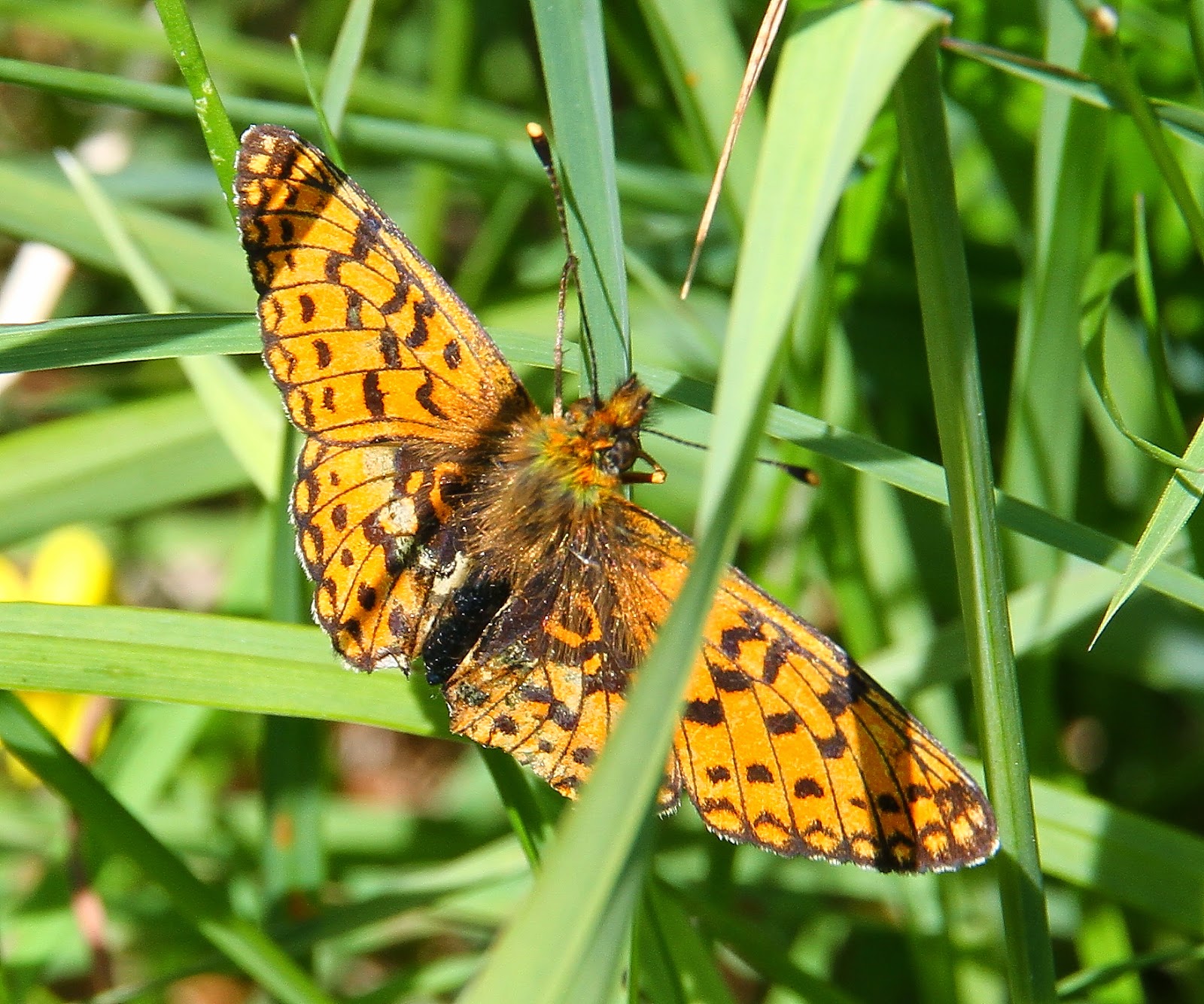
I had seen very few Butterflies so far in the Canaries, but there were a few Butterflies flying around the grassy edges to the forest at Laguna de Barlovento. They were flighty and I only had a couple of opportunities to take some quick photos, as I was focusing on looking for flying Pigeons. It was disappointing to find that the two species photographed were regular visitors to my UK garden.
It was now around one-thirty. I figured I wasn't likely to see any Bolle's Laurel Pigeons at Laguna de Barlovento and I might as well head back to the Spirit of Discovery for a late lunch. On port days, it's possible to get a late lunch as long as it's ordered before three.
The island has a much larger population that Lanzarote and the houses are very different to the traditional houses on Lanzarote
I stopped for a few scenic photos and at one of these stops, I bumped into a feeding Monarch. At last a Butterfly species that isn't on my garden list, albeit I have seen pukka individuals on the local Winspit patch back in the 90s.
Monarch: The Canaries population is believed to have originated from North American migrants to Mexico which were blown into the Atlantic and were lucky enough to have arrived on the Canaries, where one of it's food plants, Tropical Milkweed, has been commonly introduced
The lower slopes of La Palma are covered in small fields
After about an hour's drive I was back in the city of Santa Cruz de la Palma.
Replica of Santa Maria: This replica of Columbus's ship is actually a naval museum
Replica of Santa Maria: Had I realised it was a museum, I would have stopped for a look at the exhibits which are within its hull
Heading toward the main town
I like the way this old tree has been used to provide shade for this cafe
A breaching multicoloured Humpback Whale
We departed at five and managed to get about ninety minutes of surveying in before we lost the light. I saw a couple of Dolphins, which were too brief a sighting to be possible to identified.
The coastal edge of the island was very heavily scarred by valleys
An atmospheric sunset: With all the storms we weren't going to get the lovely orangey sunsets I had seen on the previous two Saga cruises
It was time to head off for dinner, followed by booking a hire car for our next Atlantic island of Madeira. I will cover that in the next Blog Post.