Showing posts with label Little Bronze-cuckoo. Show all posts

4 Nov 2022

4 Nov 22 - Indonesia - Banda Sea Cruise Day 9 - More Leti Birding

We had had a successful start to the morning's Birding on Leti with good views of the endemic Kisar Friarbird, along with the local subspecies of Yellow-throated Golden Whistler & Southern Boobook. Plus, I had seen a bonus Red-backed Buttonquail. We still had more time birding the forest & field edges to the village where we had landed before dawn.
Black-backed Fruit-dove: This is the lettiensis subspecies which is restricted to Leti, Moa, Luang, Sermata and Teun Islands. There are four other subspecies of this Lesser Sundas endemic
Rose-crowned Fruit-dove: This is the roseipileum subspecies which is restricted to East Timor, Wetar, Romang, Kissar, Moa & Leti Islands. Like the xanthogaster subspecies that occurs on Babar, Damar & the Tanimbar Islands, it does not have the rose crown that the third Lesser Sundas subspecies and the two Australian subspecies have
Timor Zebra Dove: This is more commonly known as Barred Dove. I've kept to the name I originally knew it as during my first visit to Indonesia, as I generally get confused with the names for this group of similar-looking small Doves
Little Bronze-cuckoo: This is the rufomerus subspecies which we had previously seen on Damar Island. It also occurs on Romang, Kisar, Moa & Sermata Islands
Cinnamon-banded Kingfisher: This is the dammerianus subspecies which occurs on Moa, Leti, Babar & Damar Islands. Two other subspecies occur on other Lesser Sundas & Tanimbar Islands
White-shouldered Triller: This is a monotypic Wallacean endemic which occurs from East Java and Bali to Sulawesi subregion & the Lesser Sundas
Paddyfield Pipit: This is the medius subspecies of the Eastern Lesser Sundas. Another subspecies occurs in Bali, Sulawesi, Bali & the Western Lesser Sundas. Other subspecies occur in Borneo, the Philippines, South East Asia, Indochina, the Indian Subcontinent and St Just in Cornwall (albeit sadly this individual never made it onto the UK List)
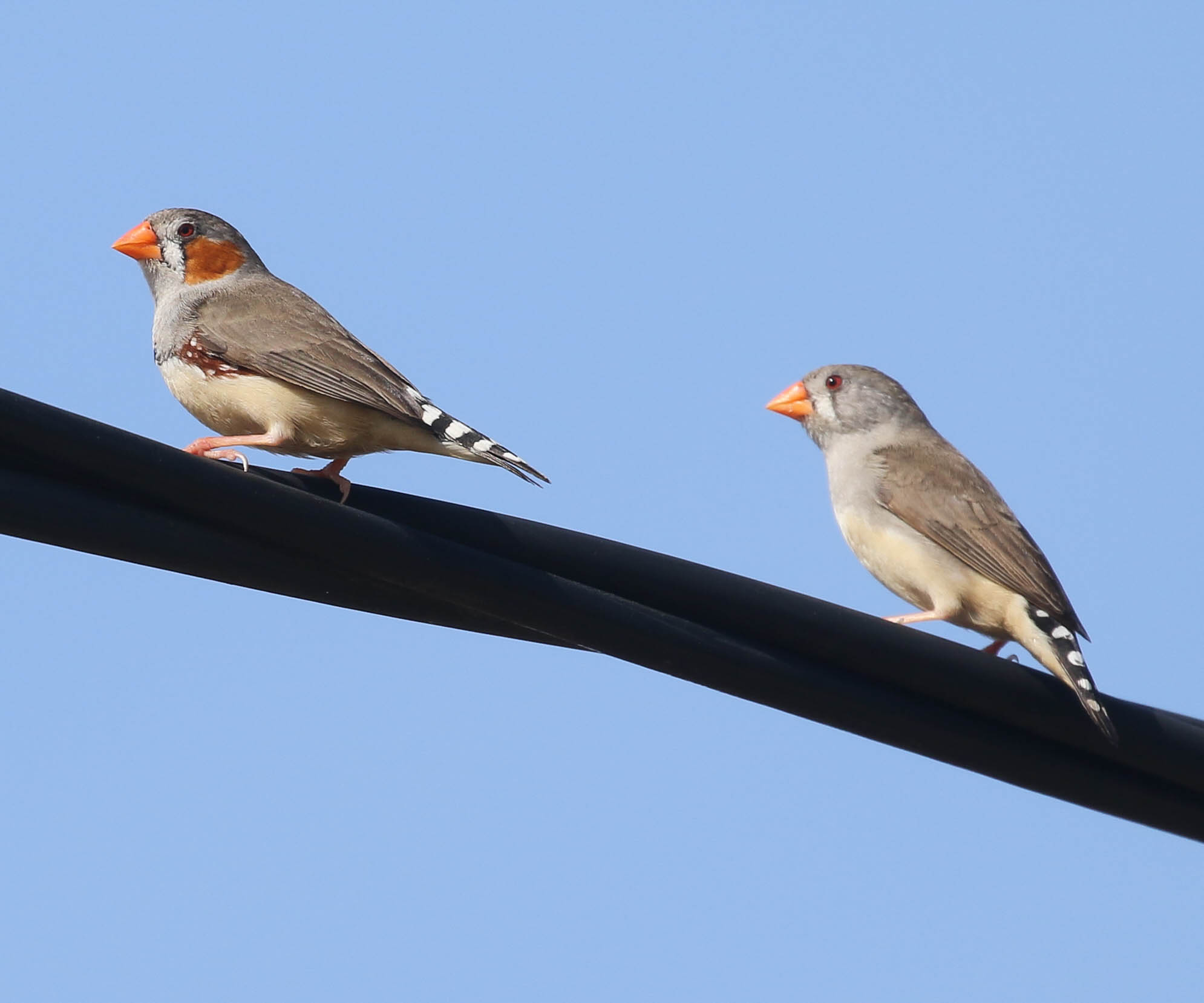
Zebra Finch: Male on the left & female on the right. This is the guttata subspecies which occurs from Lombok to Sumba, Timor & some of the Banda Sea islands, which Clements lumps with the Zebra Finch found in Australia. IOC & the Birds of the Indonesian Archipelago splits guttata as a monotypic species: so this will be another armchair Tick for me when I get the time to convert my birding database to follow IOC taxonomy
Zebra Finch: Female. That is an impressive bill
We returned to the village in late morning where we were met by the Lady Denok's boats. It had been another successful morning ashore.
Tree Sparrow: This is the malaccensis subspecies. We typically saw Tree Sparrows as we got back to the villages at the end of the Birding
Back in the village
Just in case, we weren't sure if this was a Christian village
On the beach waiting for the Lady Denok's boats
Looking back on the village

3 Nov 2022

3 Nov 22 - Indonesia - Banda Sea Cruise Day 8 - Birding On Damar

We had a pre-dawn landing in the Muslim village on Damar to allow us to walk through the village & meet our guides at the far end of the long village at first light. It was about a two & a half miles of walking along a steadily ascending track until we reached the better forest around 300m. This was our site for the main target species: Damar Flycatcher. This is a single island endemic species. We saw a few birds along the walk in the early morning light, but we didn't linger for too long as everybody was keen to push on to look for the Damar Flycatcher, before it got too hot.
The rising track passed through a lot of secondary edge
Little Bronze-cuckoo in the early morning light: This is the rufomerus subspecies that occurs on the Romang, Kisar, Leti, Moa, Sermata and Damar Islands in the Lesser Sundas
Northern Fantail: This is the hoedti subspecies of Northern Fantail that occurs on the Romang, Leti, Moa, Sermata and Damar Islands in the Lesser Sundas. It has been proposed to be split as a monotypic species, Banda Sea Fantail, by the Birds of the Indonesian Archipelago due to pronounced vocal & plumage differences within the Northern Fantail complex. Currently, Clements & IOC haven't split the Northern Fantail complex
The forest looked better by the time we reached an elevation of around 300m. Fairly soon we were watching our first Damar Flycatchers. The males were very active & didn't stay for long in any perch. It was another endemic species with a very limited range for the trip.
Finally, the forest improved
Damar Flycatcher: Male. We saw three Damar Flycatchers in the morning
Damar Flycatcher: Male
Damar Flycatcher: Female
We also saw a few other forest species on Damar.
Yellow-throated Golden Whistler: This is the dammeriana subspecies which is another potential future split that has been proposed by The Birds of the Indonesian Archipelago field guide, from the Yellow-throated Golden Whistler complex. Currently, Clements and IOC treat it as a subspecies of Yellow-throated Golden Whistler. There is further work required in this group before the taxonomy becomes finalised
Spectacled Monarch: This is the trivirgatus subspecies that occurs in the Lesser Sundas. Other subspecies occur in the Moluccas & Australia
It was time to slowly wander back to the village.
These locals raced past us on the track down the hill carrying heavy-looking sacks of nuts
We took the walk down the hill at a more leisurely pace
As we reached the edge of the village, a damp grassy patch held a Wood Sandpiper & four Eastern Yellow Wagtails.
Wood Sandpiper: Wood Sandpipers breed across Eurasia & winter from South Africa to South Asia & Australia
Eastern Yellow Wagtail: Wilbur confirmed this is the tschutschensis subspecies
Spider sp.: There is a small brown Spider just behind the large Spider's head & I'm assuming this is a male as many species of Spiders have very large females and very small males. The males take their lives into the hands when trying to mate & too often become the next meal for the female
I hadn't expected to see paintings of Father Christmas on a police station wall
We returned to the Lady Denok for lunch. I skipped the early afternoon PADI diving & snorkelling session in favour of catching up with lost sleep. I wanted to be awake for the seawatching in the late afternoon when we left Damar & headed for Leti Island. In hindsight, this was probably a bad decision, as it was a quiet crossing with a Wilson's Storm-petrel, some Brown & Red-footed Boobies and a reasonable numbers of Common Noddies.
Some of the local kids getting used to a local fishing canoe
Brown Boobies
Common Noddy
Raja, our birding Mr Fixit, seawatching
One of the inter-island ferries
We finished the evening with some stunning sunsets.
This was one of the best sunsets I saw in Indonesia
The sunset looking forward
The sunset continued to impress us

31 Oct 2022

31 Oct 22 - Indonesia - Banda Sea Cruise Day 5 - Bonus Birding On East Babar

Thanks to the midnight or so departure from the Tanimbar Islands on the previous night, we arrived off the coast of the Eastern end of Babar Island in time for some bonus late afternoon Birding. Had we left the Tanimbar Islands as originally planned, we would not have arrived till after dark. We were keen to get ashore for some land Birding. The Tanimbar Islands are not regularly visited by independent Birders visiting Indonesia. However, with an airport they have been visited by a few more adventurous independent Birders in recent years.

The same cannot be said about any of the other islands we were to visit on the Banda Sea Cruise. There are no airfields on any of these islands & the only way to visit them is by boat. It would be time-consuming to try arranging transport on the occasional ships that supply those islands. Chartering a local boat would be an expensive & difficult option for a group of independent Birders. Therefore, the Banda Sea Cruise stands out as a very unique way to access these rarely visited islands.

Bird Tour Asia have over a decade of experience of visiting these islands since their first Banda Sea Cruise in 2011. Any Birder tempted by a Banda Sea Cruise after reading this Blog should be looking to book with Bird Tour Asia: rather than with an alternative company that has managed to work out enough of where Bird Tour Asia visit to start running their own trip. Why travel with a more expensive newcomer, when you can go with the experts on these islands?
Getting the boats ready to take us ashore
There seemed to be a reasonable amount of forest on the island: The big church indicated this was another Christian island
Like most of our Banda Sea landings, it was a beach landing. The trick was to get to the front of the boat & either step off or jump off the boat on a dropping wave, to avoid wet feet. We had to be equally carefully to get the timing right when getting back into the boats at the end of the Birding, but I always managed to keep my feet dry. The one exception was late on in the trip, when we had a fifty metre wade ashore due to one very shallow bay. But we were aware of that & I had my flip-flops for the landing & carried the shoes for the land.

We were quickly ashore to find there was a drivable dirt track just behind the first line of trees. This would allow us to easily see the trees. Sadly, we also found one or two patches of trees that had been cleared to allow for Bananas to be planted in the future. We saw a good selection of Babar's birdlife that afternoon, albeit there wasn't a lot of opportunity to get photos. Some of the highlights included Pacific Emerald Dove, Timor Zebra Dove (AKA Barred Dove), Rose-crowned Fruit-dove, Little Bronze-cuckoo, Banda Honeyeater, White-shouldered Triller, Wallacean Whistler, Cinnamon-tailed Fantail, a potential future split from the Australian Arafura Fantail (which the Birds of the Indonesian Archipelago call Supertramp Fantail), Island Monarch, the lovely Orange-banded Thrush & Red-chested Flowerpecker.
Timor Zebra Dove: This is more commonly known as Barred Dove. I've kept to the name I originally knew it as during my first visit to Indonesia
Little Bronze-cuckoo: This is what Little Bronze-cuckoos normally look like, which looks & sounds different to the distinctive Pied Bronze-cuckoo that we saw on the Tanimbar Islands
The Lady Denok
All too quickly the light started to go. We couldn't leave yet as we wanted to look for the local subspecies of Southern Boobook. Boobook Owls have long been a potential area for splits as studies look at their vocalisations and other differences. The Boobooks on Babar as currently considered to be the cinnamomina subspecies of Southern Boobook. Whether that will still be the case in another decade is something we will have to wait & see. Everybody was keen to look for one, just in case. One was heard calling as it got dark & Wilbur found a small forest track heading in for a couple of hundred metres. After a short wait, it responded to his recording & it was sitting above our heads.
Southern Boobook: This is the cinnamomina subspecies which is endemic to the Babar Islands. Other subspecies occur on Leti & surrounding islands, Sawu Island which lies between Sumba & Timor, the Kai Islands, Southern New Guinea and Australia. Like all my other Owl photos, this was photographed on a high ISO and using torchlight.
We had enjoyed some successful bonus Birding on Babar in the afternoon and evening. We had also avoided having to get up in the wee small hours of the following morning to look for Southern Boobook. Albeit, we still were up before dawn for breakfast prior to a dawn landing.

It was time to signal to the boats to return to the shore to collect us. Once we had eaten, the Lady Denok started sailing to our next destination at the Western end of Babar.

29 Oct 2022

29 Oct 22 - Indonesia - Banda Sea Cruise Day 3 - A Few More Tanimbar Species

After lunch we returned for another afternoon & early evening session along the Eastern Road of the island. We stayed out after dark looking for Lesser Masked Owl, but as mentioned in an earlier Blog Post as a result of the group splitting up, only three of the group had views that evening. Tony & I had seen one fly across the road as we were driving back to the hotel on the previous evening, but that was far from ideal views.
Timor Zebra Dove: This is more commonly known as Barred Dove. I've kept to the name I originally knew it as during my first visit to Indonesia, as I generally get confused with the names for this group of similar-looking small Doves
Timor Zebra Doves occur on the Lesser Sunda & Tanimbar Islands, with an introduced population on Bali. The similar-looking Zebra Dove occurs on Sumatra, Java & Bali with introduced populations on Borneo, Sulawesi, Seram and a number of other countries around the world.
Zebra Dove: Zebra Doves have pale blue, not pale yellow, orbital skin. Tahiti (3 Nov 14)
There is a very distinctive subspecies of Little Bronze-cuckoo on the Tanimbar Islands: called Pied Bronze-cuckoo. The Birds of the Indonesian Archipelago propose it should be split based on the distinct vocal & morphological differences, but so far Clements and IOC have not adopted this proposed split.
Little Bronze-cuckoo: This is the distinctive crassirostris subspecies knows as Pied Bronze-cuckoo, which occurs on the Tanimbar & Kai Islands
Little Bronze-cuckoo: This is the distinctive crassirostris subspecies knows as Pied Bronze-cuckoo
Little Bronze-cuckoo: This is what Little Bronze-cuckoos normally look like. East Babar (31 Oct 22)
Banda Myzomela: This is the annabellae subspecies which occurs on the Tanimbar & Babar Islands
Banda Myzomela: The taxonomy of the Indonesia Myzomelas is likely to continue changing over the near future. Currently, Clements and IOC consider this as Banda Myzomela, which occurs on the Tanimbar & Babar islands with a second subspecies on the Moluccan Banda Islands. The Birds of the Indonesian Archipelago have proposed these two subspecies are split on the basis of strong vocal and some plumage differences. The authors have proposed this species should be called Tanimbar Myzomela
Banda Myzomela
Tanimbar Flyrobin
Tanimbar Flyrobin