
Last couple of hours at the Kfar Ruppin kibbutz, before heading back to Tel Aviv. I opted for some photography from the hide so the others dropped me there, before heading off for some general birding around the fish ponds. There was more activity around the pond by the hide this morning, which was good.
 Plenty of organisations have contributed to the bird hide
 The approach to the bird hide: Generally, approaches to hides aren't this well designed to avoid visitors disturbing the wildlife
 Panoramic photo of the pond in front of the bird hide
 White Pelican: Parties started rising from the fish ponds as the temperatures warmed up
 White Pelican
 Night Heron: Adult. At one point, a lot of the roosting Night Herons seemed to get jumpy & were all watching the ground. Presumably a Jackal walking around

 Black Kite Farming: Looks like they also grow Black Kites as well as other fruits, arable crops & rear fish
 Turtle Dove: Whilst quite nervous, they eventually started appearing for a drink & gave better views than the previous day
 Turtle Dove: These are the lucky ones that are migrating via a country which doesn't engage in hunting of birds. Sadly, Malta does & the EU turns a blind eye to Spring hunting of Turtle Doves & Quails in Malta. This allows the totally disgraceful illegal hunting of many other species of birds that goes on as a result of Malta allowing hunting of a rapidly declining European Dove. If you find this as unacceptable as I do, then please support this Spring's campaign, spearheaded by Chris Packham, to stop the Malta Massacre On Migration and also the good work being done by Birdlife Malta
 Tree Pipit
 Yellow-vented Bulbul: Presumably, a locally ringed bird
 Graceful Prinia
 Reed Warbler
 Collared Flycatcher: Female. She was as shy as yesterday, but I managed to get a few more photos
 Collared Flycatcher: Female
 Greenfinch: This is the chlorotica subspecies which occurs in Syria, Lebanon, Israel & Jordan & winters in the Sinai & Egypt
 Ortolan: One was still hanging around the pond
 Jackal: This cracking Jackal appeared briefly near the pool, before getting spooked. But it returned & posed for some photos (just a bit too close for the 400 mm lens)
All too soon, the others reappeared to collect me so we could finish the packing & more importantly, pack away the breakfast. Then it was on the road to Ma'agan Michael which is an area of coastal fishponds about 40 miles North of Tel Aviv. This was a site I had visited on the first trip, but not sure we ever found the best area to bird. Despite better information & not being responsible for the directions this time, I don't think we did as well at working out where to go as in 1994. Still we did find some fish ponds & a few new Waders for the trip list.
Jackal: This cracking Jackal appeared briefly near the pool, before getting spooked. But it returned & posed for some photos (just a bit too close for the 400 mm lens)
All too soon, the others reappeared to collect me so we could finish the packing & more importantly, pack away the breakfast. Then it was on the road to Ma'agan Michael which is an area of coastal fishponds about 40 miles North of Tel Aviv. This was a site I had visited on the first trip, but not sure we ever found the best area to bird. Despite better information & not being responsible for the directions this time, I don't think we did as well at working out where to go as in 1994. Still we did find some fish ponds & a few new Waders for the trip list.




Night Heron: Juvenile

Little Egret: Trying to get as dirty as possible in the hope of being misidentified as a dark morph Western Reef Heron

Night Heron: Male
We were soon heading off to Hayarkon Park in central Tel Aviv for the final hour of birding. Reading a couple of birding reports, there are several introduced species in Israel which have self-sustaining populations & are no less tickable on the Western P list, than Pheasant or Ring-necked Parakeets in the UK. Given the site was about 30 minutes drive to the airport, then it was worth a quick look. From my viewpoint, the most interesting species was Vinous-breasted Starling, a species I had looked for in the past in a central Bangkok park, but failed. But we also saw Monk Parakeet: my final Western P tick (albeit another established Introduction).
Cattle Egret: This is the nominate ibis subspecies of the Western Palearctic, Africa, North & South America
Monk Parakeet: A distant flight show was all I could get in the final few minutes, while the others were looking for the Vinous-breasted Starlings I had found
Jackdaw: This is the soemmerringii subspecies of Eastern Europe & Central Asia which some winter in Iran & Kashmir
Hooded Crow: This is the pallescens subspecies of coastal South Turkey to Israel, Egypt & North Iraq
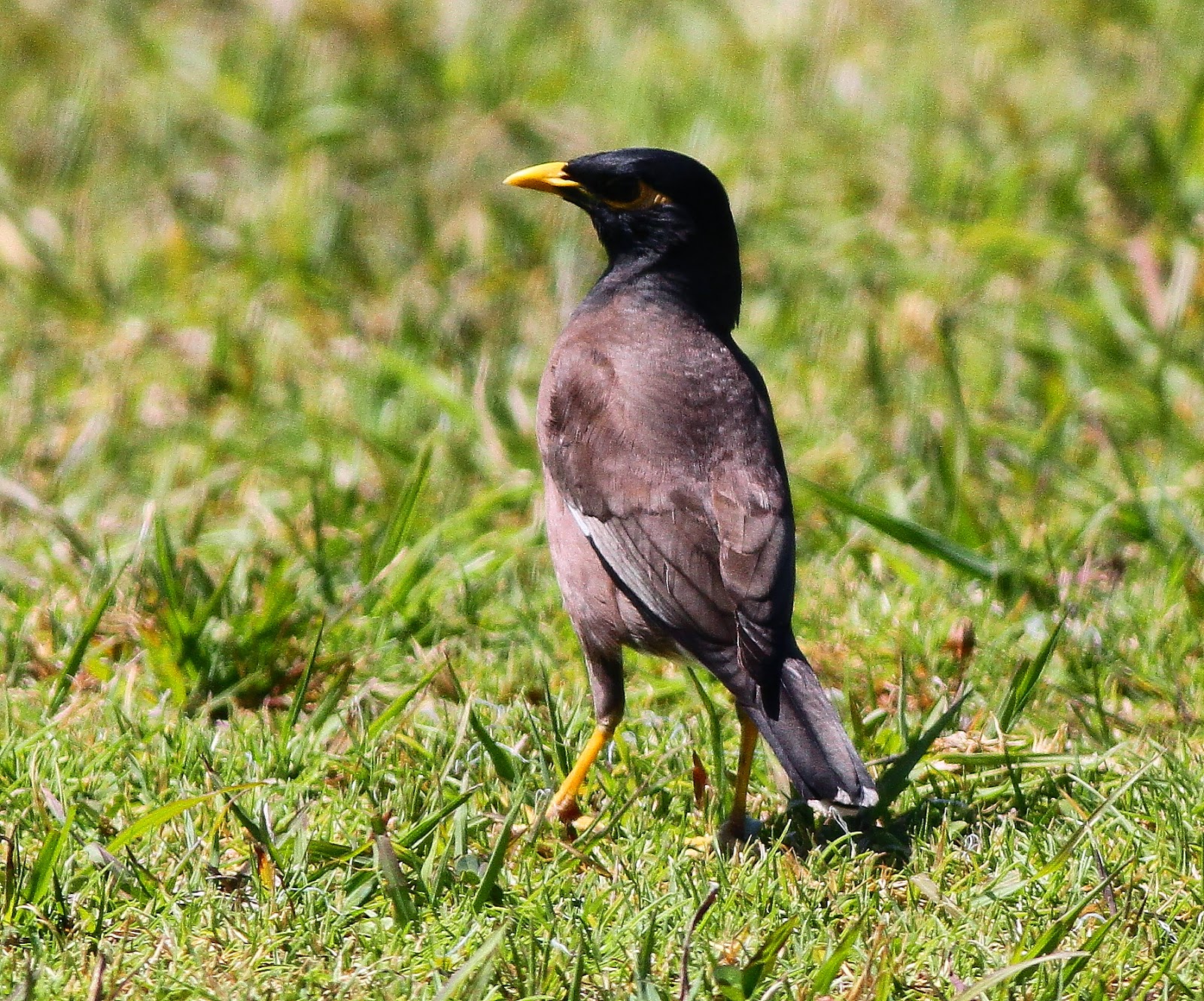
Common Myna: Another Introduced self-sustaining species which we had seen in flight on the drive South from the airport on the first afternoon
Vinous-breasted Starling: A World tick, but it gets placed in the separate Cat C list (Introduced) with the hope I will eventually see a wild bird in its natural range
Finally, it was time to pack the optics in the bags & head to the airport for the Easy Jet flight home. A great trip with some good birding mates, great birds, good photo opportunities & a new ticks. What more could you want from a trip. So thanks to the team for making it such a good & enjoyable trip.
Mark 'Edge' Edgeller
Nigel Jones: (Photo copyright Simon Ingram)
Simon Ingram: Thanks also for the photos of me (on Mount Gilboa) & Nigel (above) for the blog
Finally, my new friend: Wish I could have brought him home


