2 Feb 2022

2 Feb 22 - Brands Bay's Wintering Rock Pipits

Every now and then over the years, I have seen one or two wintering Rock Pipits at Redhorn Quay, Brands Bay. They are erratic visitors there and they clearly feed elsewhere as well, as I can miss them on visits, before seeing them again. I only see them in the peak of the winter and they appear to leave well before the Spring: albeit I generally only walk out there in the Autumn and Winter. I've always assumed they are the local Rock Pipits from Old Harry or the Purbeck coastline. Finally, I managed to get some decent photos of one individual.
Rock Pipit
Local Lytchett Bay ringer, Shaun Robson, has commented that "our work so far has failed to identify any difference between the Rock Pipit races in non-breeding plumage: I am anticipating that we may find that Scandinavian are whiter in outer tail feathers, but that's not confirmed". They believe all of their wintering Rock Pipits are the Scandinavian subspecies at Lytchett Bay, which is at the other end of Poole Harbour. There is an ongoing colour-ringing scheme to see if any of their Rock Pipits can be located in the breeding season to confirm this. So, could this be a local Rock Pipit or a wintering Scandinavian individual?
Rock Pipit
Rock Pipit
Rock Pipit
Rock Pipit
Rock Pipit

31 Dec 2021

31 Dec 21 - A Completed New Year's Resolution

I wonder what percentage of people who make New Year's Resolutions actually complete them. Well today I completed my 2021 New Year's Resolution. The plan was a Birders take on the Lands End to John O'Groats walk, which is around 870 miles depending on the route. That seemed something that needed improving both to make the route more applicable & interesting to a Birder & to make it more of a challenge. A bit of checking distances a year ago confirmed that it was possible to work out a route from St Agnes to Hermaness taking in three of the island groups well known to Birders, as it also included crossing the Orkney Islands. This also brought the distance up to 1001 miles (38.2 Marathons) which seems more of a challenge. That is 2.75 miles a day, so still not that challenging a distance to walk each day. In the end, I lost 68 days to work, weather etc when I couldn't get out, which meant I averaged 3.4 miles on walking days.

Given the logistic factors of still working & lockdown, then it clearly wasn't going to be possible to walk the actual route in 2021. However, it could still be walked as a virtual route with the rules allowing distances walked while birding. I wasn't counting distances walked on supermarket visits. In the end, only 27 miles were walked outside of the Historic Isle of Purbeck. I had hoped to complete the full distance within the IoP, but work & the weather towards the end of the year stopped that wish.
The 1001 Mile Challenge
As I was planning the route, I found a number of websites quoting the distance from Lands End to John O'Groats for cyclists or walkers, but I couldn't find any which provided a good route to follow. As a result, I ended up using Google Maps to plan a route which ended up with a lot of virtual walking on motorway hard shoulders. In the real world, this wouldn't be legal or desirable, but it made it a lot easier to work out the distances & the checkpoints along the way.

The other advantage of it being a virtual route was being able to catch virtual boats from beaches for the sea crossings. The exception was a virtual helicopter from North Ronaldsay to Sumburgh Head: as a virtual boat would have meant having to climb the cliff & that would have been a silly idea.

One of the bonuses of the walk is I'm a lot fitter than I was a year ago. Additionally, I've also lost a reasonable amount of weight & the BMI has been in the healthy range for the last 3 months. Still more work to do on the BMI for 2022, but it's going in the right direction.
I left the Scottish mainland at the end of October. At that point, my sister was so impressed with the way the virtual walk was going, that she suggested I needed to walk back South again next year. As a result, the 2022 New Year's Resolution is to walk back from Hermaness to St Agnes which will help will lowering the BMI as well.

The final thought having completed the virtual route was it might be fun to have a go at this for real in the future. That works out about 16 miles for two months, which doesn't seem impossible to complete during the summer months. Clearly, a lot more planning would be needed to work out a nicer route that avoided walking along the M4/M5/M6 & through the centre of some fairly horrible cities like Birmingham & Glasgow. It would also involve having to carry my lightweight bivi tent, a sleeping bag, thermarest, spare clothes etc to make it an unsupported walk. But it might be a fun challenge.

20 Nov 2021

20 Nov 21 - Reflections

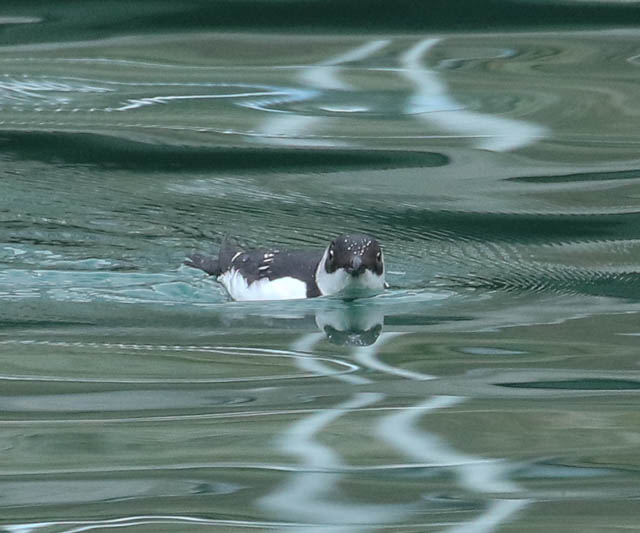
Last weekend, a Little Auk was found in Weymouth Harbour, but I didn't hear about it till it was dark. It was relocated in the channel around the old town, but there was insufficient light to get there before it got dark. It was still around a few days later, & I tried for it one lunchtime. Unfortunately, it was AWOL for the limited time I had. While I connected on an early pre work visit on Friday morning, it was fishing actively and the best views I had was as it swam past me underwater. Keen to have another attempt, I had to wait till the Saturday lunchtime, thanks to a poorly timed flu jab. But this point, it was clear it was also spending time in the main marina: which perhaps explained its absence on the first attempt. I arrived to hear it appeared to be swimming back into the old town channel. Other Birders spotted in just down channel of Westham bridge & it finally stopped fishing & spent a few minutes on the water's surface. Unfortunately, it wasn't that close, but it was good to finally get some photos. Even better, were the reflections of a turquoise sign on the Southern quayside.
Little Auk

20 Nov 21 - Reflections 2

Back on 20 Nov 21, I photographed a Little Auk in the old town channel, just down channel of Westham bridge, in Weymouth Harbour. Unfortunately, it wasn't that close, but there were some gorgeous reflections of a turquoise sign from the Southern quayside. I really like these opportunities to take photos with nice reflections. Finally I've had the time to sort out the remaining photos and publish a longer Post. The photos don't need any additional words. I hope you enjoy them as much as I do.
Little Auk
Little Auk
Little Auk
Little Auk
Little Auk
Little Auk
Little Auk: Finally, this was the original Reflections photo

7 Nov 2021

7 Nov 21 - Two Down, Two To Go

In a previous Blog Post, I belatedly reported on the twitch for the Coverack Rufous Bushchat on the Lizard on 23 Aug 21. This was one of four UK Ticks that turned up in 2020 which I didn't go for: as I couldn't justify it with the ongoing problems with C19. I was pleased to have another chance the following year with another Rufous Bushchat. There were still three other big twitches that I turned down in 2020: the Tiree Yellow-bellied Flycatcher (1st UK record), the Yell Tennessee Warbler (6th UK record) and the County Durham Taiga Flycatcher (4th UK record). The first two were the most problematic for me, as they involved travel to more remote locations, especially the Yellow-bellied Flycatcher.

By the start of Nov 20, we were entering the second national lockdown. But there were already some local restrictions in place in parts of the UK to reduce C19 risks when these twitches occurred. Not that any of this worried the twitchers who went for these birds or the rising C19 levels as the UK went into the late Autumn of 2020. A handful of the most hardcore twitchers had broken multiple lockdown rules to twitch the Irish Cabot Tern & having broken those lockdown rules, hadn't self isolated long enough & were freely mixing with some of the twitchers when the Yelkouan Shearwaters turned up off Portland.

By Autumn 21, most of the UK population had been double vaccinated, ignoring the covid deniers. I was still very cautious of indoor mixing and I was wearing masks at all times when indoors. But I was more confident of outdoor mixing, albeit I was still socially distancing more than most. My interest was piqued when I saw that another Taiga Flycatcher had been found at the Foghorn Station at Flamborough in the early afternoon of 16 Oct 21. I decided to wait & see if it was seen the following day: but it wasn't. That saved me a long drive to Yorkshire. On 4 Nov 21, a Taiga Flycatcher was found in the wood at South Landing: presumably the same individual. It was seen over the next two days and when it was still there on the morning of Sunday 7th, I finally convinced myself to face the long drive to Flamborough.

I arrived at the South Landing car park in the mid-afternoon and quickly received an update from Birders in the car park that the Taiga Flycatcher was on view and there was also a Red-flanked Bluetail on the same path. I walked into the wood and quickly found a small group of people. This was for the Red-flanked Bluetail. I saw it quickly & left immediately, as I was aware that the Taiga Flycatcher was only showing on & off. I was starting to worry that if the sun started to drop on the wood, the insect movements would quieten down & the Taiga Flycatcher might disappear for the day. I didn't fancy the night sleeping in the car & having to ring work to say I needed a day of emergency unpaid leave. I carried on & was soon in the area of the Taiga Flycatcher. Fortunately, I saw it after a few minutes for a short view & some initial photos.
Taiga Flycatcher: They are a cold grey colouration without any of the warmth of Red-breasted Flycatchers
Taiga Flycatcher: They have an all dark bill, whereas Red-breasted Flycatchers will generally have a pale base to a dark bill
This was followed up about twenty minutes later with another longer duration of views, but it was a bit more obscured.
Taiga Flycatcher: Again there is none of the warmth of a Red-breasted Flycatcher
Taiga Flycatcher: The black extends onto the upper tail coverts and rump with a paler back. Red-breasted Flycatchers have pale backs with darker rump & uppertail coverts, which are not as black as the black on the tail
Another thirty minutes of waiting & it hadn't shown again and the wood was starting to cool down. I checked if the Red-flanked Bluetail was still on view, but it too had disappeared, so I didn't stay around. I still had a six hour drive to get home.
Taiga Flycatcher: The first UK record of Taiga Flycatcher was found at Flamborough: it stayed from 23-26 Apr 03. But it wasn't as well twitched as it should have been as Taiga Flycatcher was still regarded as the Eastern subspecies of Red-breasted Flycatcher in those days
I think it will be a lot harder to see another Yellow-bellied Flycatcher or Tennessee Warbler. However, I twitch Birds because I would like to see them in the UK & usually there is something to be learnt on the identification front. Also, as it is an occasional change from my local Birding, as I rarely go Birding outside of the ten miles from my home patch. I don't twitch because I feel I must keep up or ahead of other twitchers. Therefore, I won't lose any sleep, if I never get the chance to see either of these species in the UK.

1 Nov 2021

1 Nov 21 - Another Snow Bunting

The previous Blog Post covered a showy Snow Bunting at Durlston. Surprisingly, within a week & a half, another local Snow Bunting was found. This time it was on Redhorn Quay, which is the sandy peninsula which separates the inner & outer parts of Brands Bay.
Snow Bunting
Incredibly, this Snow Bunting was joined by a second individual on 5 Nov. Both remained on Redhorn Quay until 9 Nov, with a single individual which was last seen on 10 Nov.
Snow Bunting
Snow Buntings remain a scarce species on the Studland patch with the following records:
  • 1935 - One at Shell Bay & Studland Beach on 29 Sep 1935
  • 1948 - One at Studland Beach on 20 Oct 1948
  • 1952 - One at South Haven from 16 to 20 Jan 1952
  • 1957 - up to four at Shell Bay & Studland Beach from 3 Oct to 17 Dec 1957
  • 1958 - One at Studland Beach on 25 Jan 1958
  • 1961/62 - Two to three at Studland Beach from 17 Dec 1961 to 3 Feb 1962
  • 1963 - Four at Studland Beach on 3 Feb 1963
  • 1968/69 - Up to five at Shell Bay & Studland beach from 13 Oct 1968 to 18 Mar 1969
  • 1970/71 - Up to three at Shell Bay & Studland Beach from 21 Nov 1970 to 14 Mar 1971
  • 1973/74 - Up to four at Shell Bay & Studland Beach from 25 Nov 1973 to 10 Mar 1974
  • 1975 - Three at Shell Bay on 16 Nov, with two on 14 Dec 1975
  • 1976 - One at Shell Bay & Studland Beach on 17 Oct 1976
  • 1977 - One at Pilot's Point on 16 Jan, one at Shell Bay & Studland Beach on 17 Oct and one at Pilot's Point on 13 Nov 1977
  • 1981/82 - Up to twelve at Shell Bay & Studland Beach from 28 Dec 1981 to 28 Feb 1982
  • 1984 - Two at Pilot's Point from 19 Nov to 22 Nov 1984
  • 1990 - One at Pilot's Point from 3 Nov to 11 Nov and on 2 Dec 1990
  • 1991/92 - Up to four at Shell Bay & Studland Beach from 7 Nov 1991 to 19 Feb 1992
  • 1994 - Two at Shell Bay & Studland Beach on 9 Nov, with one on 10 Nov 1994
  • 1995 - One at Redhorn Quay on 4 Nov and one at Pilot's Point on 18 Nov 1995
  • 2001 - One at Redhorn Quay from 19 Nov to 20 Nov 2001
  • 2005 - One at Brands Bay on 23 Oct 2005
  • 2009 - One at Studland Beach on 24 Oct 2009
  • 2017 - One over Studland Beach on 1 Feb, one at Old Harry on 17 Feb, with one at Pilot's Point from 4 Mar to 10 Mar 2017
  • 2021 - One at Redhorn Quay from 1 Nov to 4 Nov, with two from 5 Nov to 9 Nov and one on 10 Nov 2021
  • 2022 - One at Shell Bay from 10 Nov 2022 to 15 Nov 2022.

22 Oct 2021

22 Oct 21 - The Durlston Snow Bunting

The previous day, there had been news after it was dark, that there had been a Snow Bunting at Durlston. It was looked for early in the morning with negative news. However, somebody else looked at lunchtime & confirmed it was still present. As I was doing a historic Isle of Purbeck Year List, I popped in the afternoon for a quick look. It proved to be a very showy & approachable individual that was feeding very confidently at the seaward edge of the Tilly Whim Gully.
Snow Bunting
Snow Bunting
Snow Bunting
Snow Bunting
Snow Bunting
Snow Bunting