Showing posts with label Lesser Frigatebird. Show all posts

11 Nov 2022

11 Nov 22 - Indonesia - Banda Sea Cruise Day 16 - Kalao: Our Final Island Landing

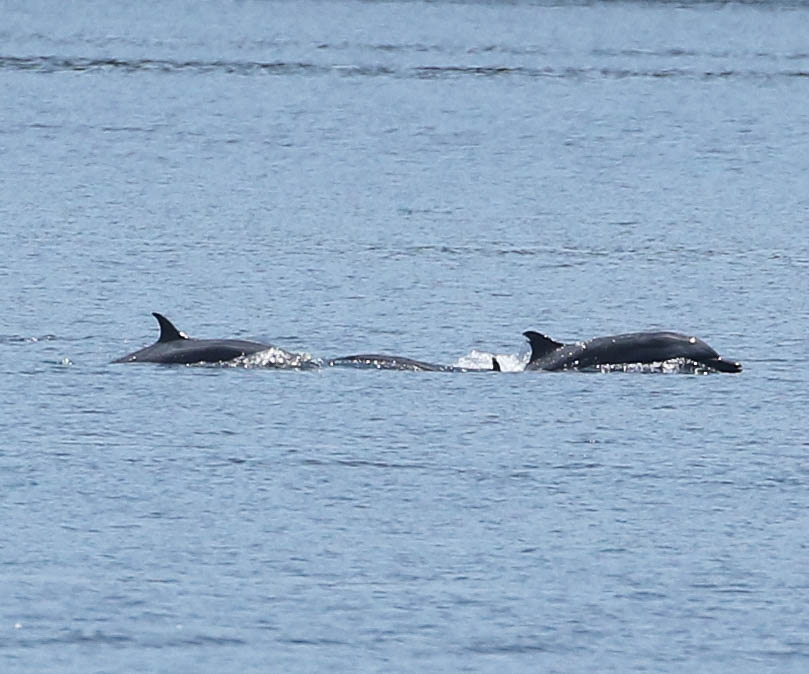
There was some time for seawatching on the relatively short crossing from Tanahjampea Island to Kalao Island. The highlight was a pod of about sixty Indo-Pacific Bottlenose Dolphins.
Kalao comes into view
Indo-Pacific Bottlenose Dolphin: One of the pod surfaces, showing a short & stout beak and uniform-looking body colouration
Indo-Pacific Bottlenose Dolphin: They are a small & fairly compact Dolphin with a noticeably falcate dorsal fin. There is clearer some variation in the dorsal fin shape, which is likely in a large pod where there will be a variation of ages & sexes
Indo-Pacific Bottlenose Dolphin: This photos shows the short & stout beak and short body in front of the dorsal fin
Indo-Pacific Bottlenose Dolphin: Another individual showing a thinner beak: perhaps this is an immature individual
Indo-Pacific Bottlenose Dolphin: Another profile shot
Indo-Pacific Bottlenose Dolphin: This photo shows the length of the body behind the dorsal fin
Indo-Pacific Bottlenose Dolphin: A final photo of the tail flippers
Lesser Frigatebird: This Lesser Frigatebird was the highlight on the Avian front on the crossing
Lesser Frigatebird
White-bellied Sea-eagle: This was circling over the beach
We landed by this small village
A local boat
Another local boat
It was good to see a Malaysian Plover on the beach as we landed. It was nervous & started to walk away from us, before deciding to fly to a nearby point.
Malaysian Plover: This is a monotypic species which occurs on the sandy coasts of South East Asia, the Philippines & Indonesia
Malaysian Plover
Malaysian Plover
Common Sandpiper: This is a widespread species that breeds across the Palearctic & winters to Africa, India, South East Asia & Australia
After greeting the villagers, we headed into the trees behind the small village.
The forest looked in better condition than we saw on Tanahjampea
The villager's Water Buffalos looked happy with this muddy pool
Great-billed Parrot: This is the nominate megalorynchos subspecies which occurs in Sulawesi & its adjacent islands, the Moluccas & the West Papuan islands
Broad-billed Monarch: This is the ruficollis subspecies which occurs on the Lesser Sundas & the Islands in the Flores Sea
Broad-billed Monarch: There are no prizes for guessing how it got its name
The final species is another Blue Flycatcher with contested taxonomy. The one thing that seems to be agreed is it is not the same species/subspecies as the Blue Flycatcher that occurs on neighbouring Tanahjampea. Clements regards it as a monotypic endemic Kalao Blue Flycatcher which is restricted to Kalao. IOC (v12.2) lumped it back into Mangrove Blue Flycatcher as the only remaining Wallacean subspecies, with other subspecies in the Malaysian Peninsula, Java, Sumatra, Borneo & the Phillipines. Historically, other subspecies of Mangrove Blue Flycatcher were split as Sulawesi Blue Flycatcher. However, IOC (v13.1) has split it again as a monotypic endemic Kalao Blue Flycatcher. Eaton et al in the Birds of the Indonesian Archipelago splits it from Mangrove Blue Flycatcher & Sulawesi Blue Flycatcher based upon strong differences in plumage, mtDNA & vocalisations. At the moment, I'm still following Clements taxonomy.
Kalao Blue Flycatcher: This is a monotypic endemic which is restricted to Kalao
Kalao Blue Flycatcher: This was a shy individual & the photos are no better than record shots
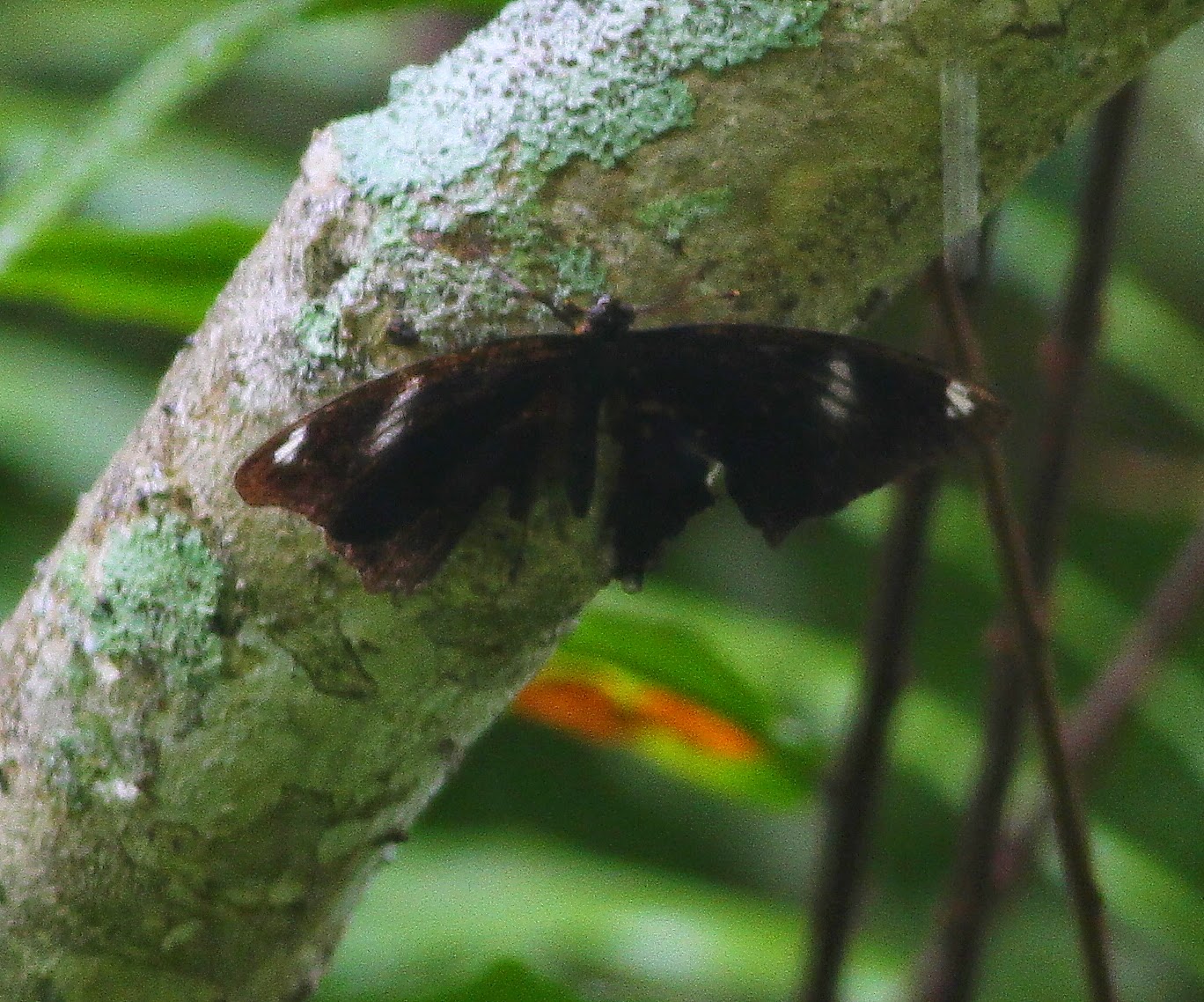
Indonesian Butterfly sp.
Indonesian Robber Fly sp.: I've forwarded a copy to my mate John, who has now retired from the Natural History Museum having spent his life working on Horse Flies & Robber Flies. It will be interesting to see if he can get a name for this species
Returning to the beach through the village
Having seen our main target species, the Kalao Blue Flycatcher, we returned to the Lady Denok for our final voyage to the Flores Island port of Labuan Bajo. The Banda Sea Cruise was nearly over.
The crew always turned out to greet us on our return to the Lady Denok with cold flannels & drinks
Richard (front) & Tony enjoying a Coconut drink
As we sailed from Kalao, we saw this fishing boat signalling to us
My worry was the crew of this fishing boat had a major problem. However, it turned out they only wanted to trade some of their fish to top up their low numbers of cigarettes
We finished the evening with a cracking sunset

27 Oct 2022

27 Oct 22 - Indonesia - Banda Sea Cruise Day 1 - Our First Tanimibar Endemic: Tanimibar Triller

While we were looking at the Waders at Tanimbar airfield, we had been told that there was a snag over access to the nearby airport lake. This was a site for Spotted Whistling-ducks: a species I was keen to look for given I had missed it on the 1991 Indonesian trip. Whatever the problem was, it had been resolved & we headed back to the cars to drive to the lake.

The lake turned out to be a large lake with a lot of dead tree trunks at one end, which had died when the lake had been flooded. Somebody had tried to make the larger open water part of the lake into a tourist attraction and build a lot of sheltered seats for families to meet up for the day. There were a few boats tied up that could be rowed on the lake. However, this all infrastructure looked very rundown and clearly it looked like it never got close to repaying the investment. But that rundown state was a benefit for the Birds as they would suffer less disturbance.

We quickly saw a flock of Whistling-ducks tucked away among the dead trees. Initially, we were disappointed to find they were the commoner Wandering Whistling-ducks. Finally, a longer scan found three Spotted Whistling-ducks on the far side of the lake.
Wandering Whistling-duck
Spotted Whistling-duck: Their range spans from the Southern Philippines, through Indonesian Wallacea to New Guinea & the Bismarck Archipelago
A quick look around the scrubby, degraded edge of the lake produced my first Tanimbar endemic: Tanimbar Triller. There were also short views of a few Banda Honeyeaters: which are a Banda Sea endemic.
Tanimbar Triller: Our first Tanimbar endemic
Tanimbar Triller
There are about twenty Tanimbar endemics on the Tanimbar islands. Taxonomy in Indonesia is likely to fluid over the next few years. The excellent Birds of the Indonesian Archipelago by Eaton et al has proposed a lot of potential splits in Indonesian species. Not very surprising given the islands have only really been studied for the last thirty or forty years beyond early expeditions and museum skins. The advent of DNA & sound recording studies, along with the authors and other ornithologists having the opportunity to travel to many of the more remote islands, has started to highlight there are many potential cryptic species in the country. A number of these proposed splits will have already been published and adopted by the latest IOC checklists, with some being accepted by the more conservative American-centric taxonomy followed by the Clements checklist, as maintained by Cornell University. For now I am still following an out of date 2019 Clements taxonomy, as I've not had time to convert my Birding database to the latest IOC taxonomy. When that finally happens, I expect many of the species I've seen on this Indonesian trip to become armchair ticks.
Five-coloured Munia: One of the nicer looking of the South East Asian Munias
Five-coloured Munia: This species occurs throughout the Lesser Sundas
Having seen the Spotted Whistling-ducks, Wilbur decided we should head off to the Beringin Dua Hotel, which was to be our base for the Tanimbar section of the Banda Sea cruise. The hotel provided to be a pleasant enough place with reasonable food. It was located on the bay's edge in Saumlaki. As the high tide dropped, it was clear that the water was very shallow with a few hundred metres of mudflats. Sadly, we didn't see many Waders on the mud. But it was high tide when we first saw the bay with a few distant Frigatebirds over the bay and one close Lesser Frigatebird.
The high tide view from the Beringin Dua Hotel
Lesser Frigatebird: This is one of three Frigatebirds that occurs in Indonesian waters: the other two Frigatebirds are Greater Frigatebird & Christmas Island Frigatebird, albeit the latter is rarely seen away from Western Indonesian waters
Lesser Frigatebird: The white axillaries are diagnostic for Lesser Frigatebird
An old ship slowly decaying in the bay
A traditional local fishing boat
We had time to unpack and catch up on an hour of lost sleep, before we headed out for our first afternoon Birding & some Owling.

7 Nov 2014

7 Nov 14 - More Henderson Island Endemics

Having seen the first of the four landbird endemics on Henderson Island, the Henderson Island Reed Warbler, than there were still three more endemics to see.
Henderson Island Reed Warbler: Another individual that appeared whilst photographing the White Terns
Several times during the day, We heard the short, high calls of the Stephen's Lorikeets, as they flew over the Coconut fringed edge of the island. But seeing them was a different matter. I did get some brief views & this was followed by a good flight view from the beach, of an individual further along the beach. But it flew into the trees before I could grab the camera. Despite hearing them several more times, I failed to get any more views. A real shame as it looked a great looking Lorikeet.
Stephen's Lorikeet: With no photos, I'm going to have to fall back on a photo I took of a painting in the Pitcairn museum
Another species We heard several times calling as it flew around was Bristle-thighed Curlew. Finally, I managed to get some flight shots as one flew over calling. Later we had one perched up on the edge of the island's plateau. The whole of the island is basically a coral reef which has been pushed up about 20-30 metres above sea level with a narrow coastal strip which includes a couple of beaches. I guess it wasn't too happy to have to share its beach with a bunch of Birders. This is another of the amazing Curlew species. This one breeds in West Alaska & winters in Hawaii, Micronesia & Polynesia. How the species first worked out the islands were there, is even more fascinating than how the current generation find the islands as they migrate South. 
Bristle-thighed Curlew: They winter in small numbers on a number of small islands in the Pacific
Bristle-thighed Curlew: Have a listen to Dan Lane's recording of Bristle-thighed Curlew's excellent calls on Xeno-Canto as the call is great
Bristle-thighed Curlew: Sitting on the edge of the raised coral plateau
Throughout our visit, there were a number of Seabird species flying along the beach edge or heading into nesting sites on the island.
Murphy's Petrel: This is a regional breeding endemic species which breeds on the French Polynesian Tuamotu & Austral Islands and the British Pitcairn Island group (Henderson, Oeno & Ducie Islands)
Murphy's Petrel: Giving an nice underwing view
Murphy's Petrel: Showing the pale face patch of this species 
Murphy's Petrel: We found this individual as it was moving to the beach to take off
Murphy's Petrel: A close up of the same individual
Murphy's Petrel: Another view of the typical tubenose bill
Murphy's Petrel: Later in the afternoon, I bumped into this pair of Murphy's Petrels
Red-tailed Tropicbird: This is the melanorhynchos subspecies which occurs in the West, Central & South Pacific which is replaced by the roseotinctus subspecies in the South West Pacific. Two other subspecies occur in the Indian Ocean
Great Frigatebird: Female. No surprise they were here
Great Frigatebird: Juvenile
Lesser Frigatebird: Adult male showing its diagnostic white underwing patches. This is the nominate ariel subspecies which was less commonly seen on the trip, although perhaps a few were overlooked amongst the much commoner Great Frigatebirds
White-capped Noddy
Grey Noddy: This used to be treated as Blue-grey Noddy, but Clements splits this former species into 2 Pacific species. The Grey Noddies around Pitcairn & Henderson Islands are part of the skottsbergii subspecies which also occurs on Easter Island & Sala y Gomez Island. Two subspecies are found around Lord Howe, Norfolk, Kermadec Islands & Tonga and the Chilean Desaventurados Islands, respectively 
Finally, after a lot of searching, Chris & some of the others in the group located a Henderson Island Fruit-dove. Fortunately, it stayed put which allowed Chris to find myself & the rest of the group. Another of the single Island endemics seen.
Henderson Island Fruit-dove: Time for a preen for the wet looking individual
Henderson Island Fruit-dove: It finally fell asleep to the motordrive lullaby
Being a very remote island, then there are few species of Insects there. I only saw one species of Butterfly on Pitcairn & Henderson Island: the Blue Moon Butterfly. This has a large world range from Madagascar to South & South East Asia, Japan, Australia, New Zealand and Pacific Islands as far as French Polynesia & the Pitcairn group.
Blue Moon Butterfly: Male. It's a shame the hind wings are very worn as when fresh the males have a large blue moon in the middle of the hind wing. The females are brown with off small white spots & squares along the trailing edge of the wings
We left the island after a fantastic day ashore, despite the intermittent rain, but slightly disappointed that we hadn't seen the Henderson Island Crake. With the anticipated arrival of another expedition ship for the following day & a poor weather forecast, we knew we wouldn't be considering going ashore the following day. So the plan was for a day of chumming at sea. We had time in the schedule for another attempt to land on Henderson Island, but the forecast wasn't encouraging.