Showing posts with label Arafura Fantail. Show all posts

11 Nov 2022

11 Nov 22 - Indonesia - Banda Sea Cruise Day 16 - Tanahjampea: Island Of Monarchs

We only have one Monarch in the UK, in a group of islands which are approximately 800 miles from the Scillies to the Shetlands. In comparison, Tanahjampea is less than 20 miles long & it has three Monarchs. In the previous Blog Post, I had covered many of the Birds were saw on Tanahjampea, but there were more species than I could acknowledge in the labels: hence this second Blog Post.
Despite all the of land where we landed having been cultivated, it appeared that the local Birds had adapted to this degraded habitat
There was a lot of locals moving around to their fields on these motorbikes
Island Monarch: This is the nominate cinerascens subspecies which occurs on Sulawesi, the Moluccas & Lesser Sundas. Other subspecies occur in New Guinea, the Bismarck & Solomon Archipelagos
Broad-billed Monarch: This is the ruficollis subspecies which occurs on the Lesser Sundas & the Islands in the Flores Sea. Another subspecies occurs in the Tanimbar Islands, with the final subspecies occurring in New Guinea & Northern Australia
But the Monarch we really wanted to see was the gorgeous-looking endemic Tanahjampea Monarch: the four I saw didn't disappoint me.
Tanahjampea Monarch: This is a monotypic species which is endemic to Tanahjampea
Arafura Fantail: This is the celebensis subspecies which is endemic to Tanahjampea & Kalao Islands in the Flores Sea. There are a number of other subspecies described in the Lesser Sundas, Moluccas, Tanimbar Islands, Kai islands, New Guinea & Northern Australia
Arafura Fantail
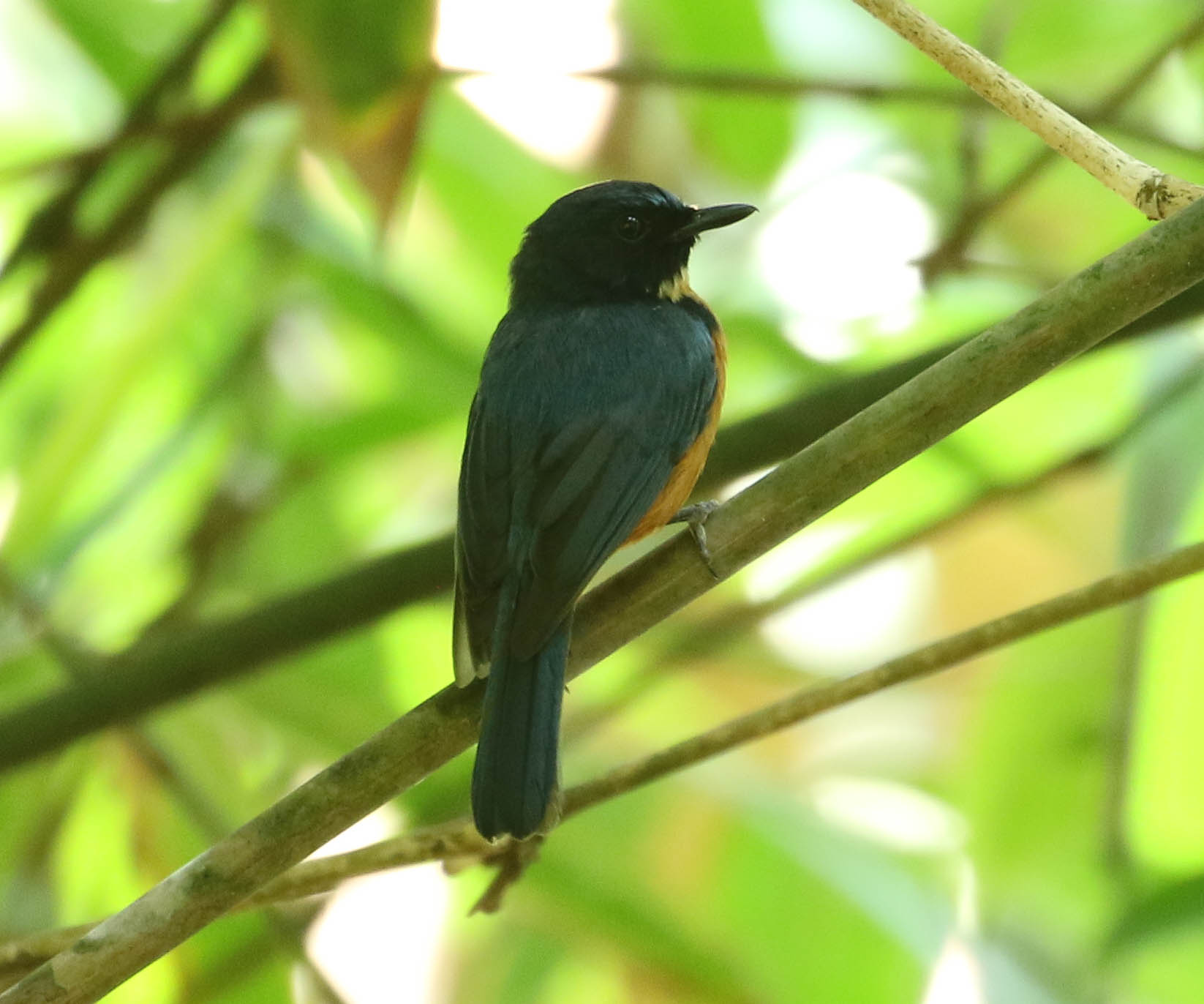
The final species is the Tanahjampea subspecies of Sulawesi Blue Flycatcher. This is a bit of a taxonomic nightmare. Clements regards it as a distant group containing a single subspecies within Sulawesi Blue Flycatcher, whereas, IOC (v12.2) splits it as a monotypic species. However, in the very latest IOC Checklist (v13.1), IOC have lumped it back into Sulawesi Blue Flycatcher, despite stating that the taxonomic status is uncertain. Eaton et al in the Birds of the Indonesian Archipelago splits it from Mangrove Blue Flycatcher & Sulawesi Blue Flycatcher based upon strong differences in plumage, mtDNA & vocalisations. At the moment, I'm still following Clements taxonomy.
Sulawesi Blue Flycatcher: This is the djampeanus subspecies which is endemic to Tanahjampea
Sulawesi Blue Flycatcher
I was happy with the Birds we had seen on the island
As the armouring on my Swarovskis starts to fall apart again, I now have a decision whether to return them to Swarovski or send them to Tony in Sydney for his unique armouring
We headed back to the Lady Denok late morning for the relatively short crossing to our final island destination of Kalao.

1 Nov 2022

1 Nov 22 - Indonesia - Banda Sea Cruise Day 6 - Back On Babar

We awoke for breakfast prior to our first light landing at the Western end of Babar. However, having seen the Southern Boobook on the previous evening, at least we didn't have to get up really early for a couple of hours before dawn Southern Boobook search.
First light in Western Babar
The crew heading back to the Lady Denok: The boat crew all had other jobs on the ship to attend to
A typical coastal scene in Indonesia: Plastic bottles thrown into the sea as they just haven't heard the problems of plastic pollution
Early morning in the village: It didn't have the closely laid houses as many other Indonesian villages
Another village scene
We had to wait for our transport to arrive, which gave us the chance to have a look around some of the gardens as we walked through the village. There were a number of large weedy gardens around the edge of the village, which allowed a few photos in the early morning light.
Uniform Swiftlet: The subspecies that is thought to occur on Babar & Tanimbar is moluccarum
Banda Myzomela: This is the nominate boiei subspecies. We had already seen the annabellae subspecies on Tanimbar
Pacific Swallow: A freshly fledged individual
Pied Bushchat: This is the cognatus subspecies which is endemic to Babar
Tricoloured Parrotfinch: This is a Lesser Sundas endemic which occurs on Timor, Wetar, Babar, Damar, Romang & Tanimbar. I had seen my first Tricoloured Parrotfinches on Tanimbar a few days earlier, but the views were too short to allow photos
The weedy plot where the Tricoloured Parrotfinches were feeding
The rest of the group by the weedy field
Indonesia has some lovely looking local cattle
There seems to be a lot of food around the village for the local pigs
As the transport hadn't arrived yet, we carried on to explore the scrubby forest & coconut plantations on the edge of the village.
Scrubby vegetation and plantations on the edge of the village
Cinnamon-banded Kingfisher: This is the dammerianus subspecies which occurs on Moa, Leti, Babar and Damar. Two other subspecies occur elsewhere in The Lesser Sundas
Arafura Fantail: It sounds like the taxonomy of Arafura Fantails needs more investigation. Clements has grouped the Indonesian and New Guinea subspecies of Arafura Fantails as Supertramp Fantails and puts the nominate Northern Australian Arafura Fantail in a group on its own: but all are within Arafura Fantail. The Birds of the Indonesian Archipelago states that while the nominate Arafura Fantail looks similar to some the Western Indonesian subspecies, these differences become successively different in the closer Supertramp Fantail subspecies. Also, the Supertramp Fantails have more complex songs than the nominate subspecies
Cinnamon-tailed Fantail: This monotypic species is restricted to Babar and the Tanimbar Islands
It was a regular sight to see small groups of graves, often with tiled coverings, around the Banda Sea villages
Cashew Nuts were a regular crop on the Banda Sea islands
I will cover the rest of the morning on Babar in the next Post.