Showing posts with label Broad-billed Monarch. Show all posts

11 Nov 2022

11 Nov 22 - Indonesia - Banda Sea Cruise Day 16 - Kalao: Our Final Island Landing

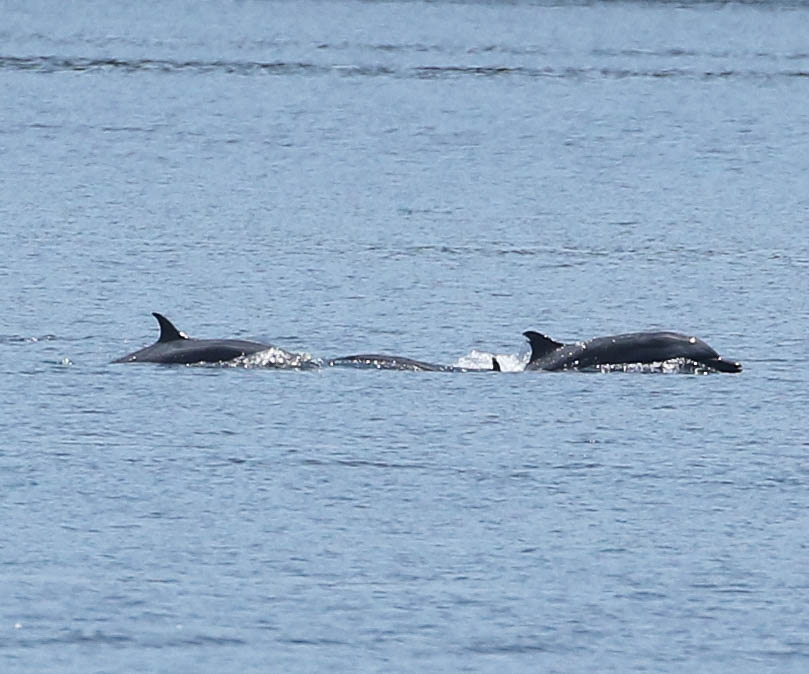
There was some time for seawatching on the relatively short crossing from Tanahjampea Island to Kalao Island. The highlight was a pod of about sixty Indo-Pacific Bottlenose Dolphins.
Kalao comes into view
Indo-Pacific Bottlenose Dolphin: One of the pod surfaces, showing a short & stout beak and uniform-looking body colouration
Indo-Pacific Bottlenose Dolphin: They are a small & fairly compact Dolphin with a noticeably falcate dorsal fin. There is clearer some variation in the dorsal fin shape, which is likely in a large pod where there will be a variation of ages & sexes
Indo-Pacific Bottlenose Dolphin: This photos shows the short & stout beak and short body in front of the dorsal fin
Indo-Pacific Bottlenose Dolphin: Another individual showing a thinner beak: perhaps this is an immature individual
Indo-Pacific Bottlenose Dolphin: Another profile shot
Indo-Pacific Bottlenose Dolphin: This photo shows the length of the body behind the dorsal fin
Indo-Pacific Bottlenose Dolphin: A final photo of the tail flippers
Lesser Frigatebird: This Lesser Frigatebird was the highlight on the Avian front on the crossing
Lesser Frigatebird
White-bellied Sea-eagle: This was circling over the beach
We landed by this small village
A local boat
Another local boat
It was good to see a Malaysian Plover on the beach as we landed. It was nervous & started to walk away from us, before deciding to fly to a nearby point.
Malaysian Plover: This is a monotypic species which occurs on the sandy coasts of South East Asia, the Philippines & Indonesia
Malaysian Plover
Malaysian Plover
Common Sandpiper: This is a widespread species that breeds across the Palearctic & winters to Africa, India, South East Asia & Australia
After greeting the villagers, we headed into the trees behind the small village.
The forest looked in better condition than we saw on Tanahjampea
The villager's Water Buffalos looked happy with this muddy pool
Great-billed Parrot: This is the nominate megalorynchos subspecies which occurs in Sulawesi & its adjacent islands, the Moluccas & the West Papuan islands
Broad-billed Monarch: This is the ruficollis subspecies which occurs on the Lesser Sundas & the Islands in the Flores Sea
Broad-billed Monarch: There are no prizes for guessing how it got its name
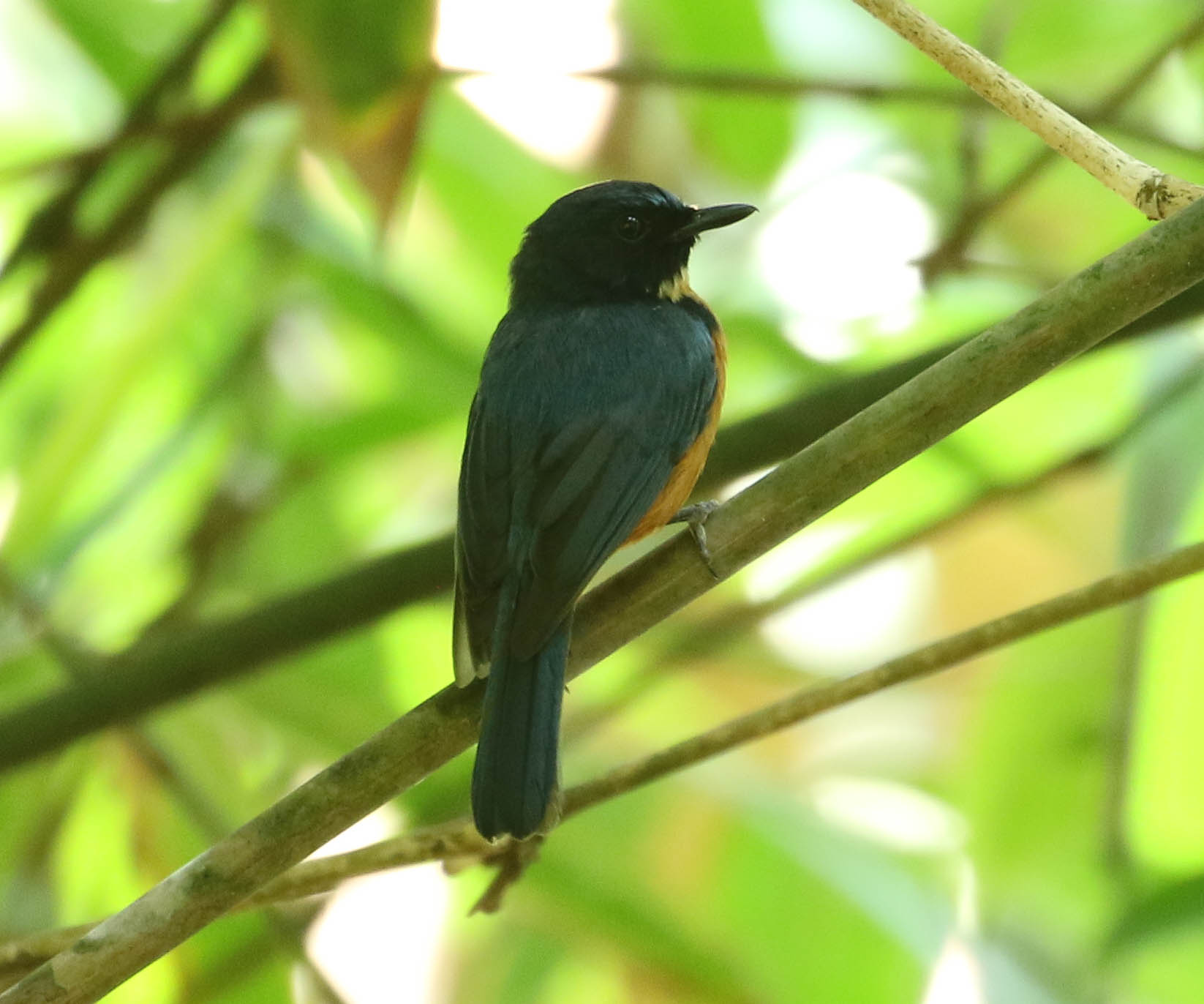
The final species is another Blue Flycatcher with contested taxonomy. The one thing that seems to be agreed is it is not the same species/subspecies as the Blue Flycatcher that occurs on neighbouring Tanahjampea. Clements regards it as a monotypic endemic Kalao Blue Flycatcher which is restricted to Kalao. IOC (v12.2) lumped it back into Mangrove Blue Flycatcher as the only remaining Wallacean subspecies, with other subspecies in the Malaysian Peninsula, Java, Sumatra, Borneo & the Phillipines. Historically, other subspecies of Mangrove Blue Flycatcher were split as Sulawesi Blue Flycatcher. However, IOC (v13.1) has split it again as a monotypic endemic Kalao Blue Flycatcher. Eaton et al in the Birds of the Indonesian Archipelago splits it from Mangrove Blue Flycatcher & Sulawesi Blue Flycatcher based upon strong differences in plumage, mtDNA & vocalisations. At the moment, I'm still following Clements taxonomy.
Kalao Blue Flycatcher: This is a monotypic endemic which is restricted to Kalao
Kalao Blue Flycatcher: This was a shy individual & the photos are no better than record shots
Indonesian Butterfly sp.
Indonesian Robber Fly sp.: I've forwarded a copy to my mate John, who has now retired from the Natural History Museum having spent his life working on Horse Flies & Robber Flies. It will be interesting to see if he can get a name for this species
Returning to the beach through the village
Having seen our main target species, the Kalao Blue Flycatcher, we returned to the Lady Denok for our final voyage to the Flores Island port of Labuan Bajo. The Banda Sea Cruise was nearly over.
The crew always turned out to greet us on our return to the Lady Denok with cold flannels & drinks
Richard (front) & Tony enjoying a Coconut drink
As we sailed from Kalao, we saw this fishing boat signalling to us
My worry was the crew of this fishing boat had a major problem. However, it turned out they only wanted to trade some of their fish to top up their low numbers of cigarettes
We finished the evening with a cracking sunset

11 Nov 22 - Indonesia - Banda Sea Cruise Day 16 - Tanahjampea: Island Of Monarchs

We only have one Monarch in the UK, in a group of islands which are approximately 800 miles from the Scillies to the Shetlands. In comparison, Tanahjampea is less than 20 miles long & it has three Monarchs. In the previous Blog Post, I had covered many of the Birds were saw on Tanahjampea, but there were more species than I could acknowledge in the labels: hence this second Blog Post.
Despite all the of land where we landed having been cultivated, it appeared that the local Birds had adapted to this degraded habitat
There was a lot of locals moving around to their fields on these motorbikes
Island Monarch: This is the nominate cinerascens subspecies which occurs on Sulawesi, the Moluccas & Lesser Sundas. Other subspecies occur in New Guinea, the Bismarck & Solomon Archipelagos
Broad-billed Monarch: This is the ruficollis subspecies which occurs on the Lesser Sundas & the Islands in the Flores Sea. Another subspecies occurs in the Tanimbar Islands, with the final subspecies occurring in New Guinea & Northern Australia
But the Monarch we really wanted to see was the gorgeous-looking endemic Tanahjampea Monarch: the four I saw didn't disappoint me.
Tanahjampea Monarch: This is a monotypic species which is endemic to Tanahjampea
Arafura Fantail: This is the celebensis subspecies which is endemic to Tanahjampea & Kalao Islands in the Flores Sea. There are a number of other subspecies described in the Lesser Sundas, Moluccas, Tanimbar Islands, Kai islands, New Guinea & Northern Australia
Arafura Fantail
The final species is the Tanahjampea subspecies of Sulawesi Blue Flycatcher. This is a bit of a taxonomic nightmare. Clements regards it as a distant group containing a single subspecies within Sulawesi Blue Flycatcher, whereas, IOC (v12.2) splits it as a monotypic species. However, in the very latest IOC Checklist (v13.1), IOC have lumped it back into Sulawesi Blue Flycatcher, despite stating that the taxonomic status is uncertain. Eaton et al in the Birds of the Indonesian Archipelago splits it from Mangrove Blue Flycatcher & Sulawesi Blue Flycatcher based upon strong differences in plumage, mtDNA & vocalisations. At the moment, I'm still following Clements taxonomy.
Sulawesi Blue Flycatcher: This is the djampeanus subspecies which is endemic to Tanahjampea
Sulawesi Blue Flycatcher
I was happy with the Birds we had seen on the island
As the armouring on my Swarovskis starts to fall apart again, I now have a decision whether to return them to Swarovski or send them to Tony in Sydney for his unique armouring
We headed back to the Lady Denok late morning for the relatively short crossing to our final island destination of Kalao.

29 Oct 2022

29 Oct 22 - Indonesia - Banda Sea Cruise Day 3 - More Forest Trail Birding On Tanimbar

In the morning, we returned to forest area we had been Birding along on the previous morning. Initially, we hung around outside the forest edge looking for Pigeons, Parrots & other forest edge species. Finally, we carried along the track into the forest as the light improved: it would have been fairly dark in the forest in the first hour of light.
Tanimbar Cuckoo Dove
Elegant Imperial Pigeon
Tanimbar Cockatoo: It was good to finally see some wild, endemic Tanimbar Cockatoos given I had previous seen a few feral individuals in Singapore. We saw them daily on Tanimbar, but this was the first one that was close enough to photograph
Little Bronze-cuckoo: This is the distinctive crassirostris subspecies knows as Pied Bronze-cuckoo, which occurs on the Tanimbar & Kai Islands. It has been proposed as a potential split from the Little Bronze-cuckoo complex, but so far this proposal hasn't been accepted by Clements and IOC
Collared Kingfisher: This is the nominate chloris subspecies which occurs in Wallacea and NW West Papua. It is a widespread species which occurs from India, through South East Asia, Philippines, Borneo, Indonesia, New Guinea & Micronesia
Dollarbird: This is the connectens subspecies which occurs in Southern Sulawesi, the Tanimbar Islands and the Lesser Sundas. This widespread species occur in the Indian Subcontinent, the Himalayas across to China, Manchuria & Korea, South East Asia, Philippines, Borneo, Indonesia, New Guinea, Bismark Archipelago & Australia
Broad-billed Monarch: This is the fulviventris subspecies which occurs on the Tanimbar Islands. Other subspecies occur in the Lesser Sundas, New Guinea and Northern Australia
Tanimbar Starling: Adult & Juvenile of this endemic Starling
Tanimbar Starling: Adult
Tanimbar Starling: Juvenile
Scaly-breasted Munia: This is the blasii subspecies which occurs on the Tanimbar Islands and Eastern Lesser Sundas
We spent a fair bit of the morning looking for & finally seeing a Banda Sea Pitta close to the territorial borders of two pairs. Eventually, Wilbur picked up where one was singing from. The views were better than this photo suggests and it proved very difficult to get the camera to autofocus on it, thanks to leaves in the foreground.
Banda Sea Pitta: This recently split species occurs on the Tanimbar, Babar, Damar & Kai Islands and a few other neighbouring Banda Sea islands
Lizard sp.
Longhorn Beetle sp.
Longhorn Beetle sp.
We saw a few of this stunning shuttlecock-sized Fungi
Having seen the Banda Sea Pitta which was the main target species for the morning, Wilbur decided we would head back to the airport lake for an hour before we returned to the hotel for lunch.